The US fired a Tomahawk missile in the Philippines from its new Typhon launcher for the first time during Washington and Manila’s annual Balikatan Exercise, a major provocation aimed at China.
The Typhon, also known as the Strategic Mid-Range Fire System, was developed by the US after it withdrew from the Intermediate-Range Nuclear Forces (INF) Treaty in 2019. The INF prohibited the US and Russia from possessing ground-based missile systems that had ranges between 310 and 3,400 miles, limits that China was not bound by.
The Tomahawk, which is primarily fired by US Navy warships, has a range of over 1,000 miles, meaning that, from the Philippines, it can reach China. Col. Dennis Hernandez, a spokesman for the Balikatan drills, said the Tomahawk was fired from Tacloban Airport on Leyte Island, from where Tomahawk missiles could strike the coast of mainland China.
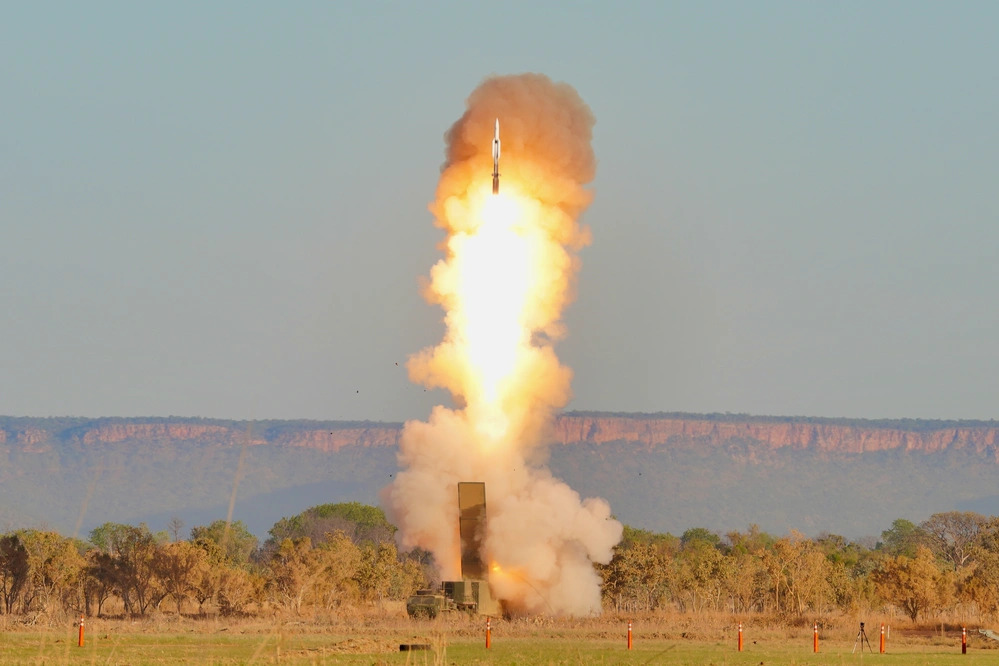
The Typhon had previously been deployed to Northern Luzon, the Philippines’ northernmost region, from where Tomahawks could reach deep inside China. Hernandez said that the Tomahawk fired during the drills hit a target about 390 miles to the northwest of Leyte Island at the Fort Magsaysay base in Luzon.
The Typhon can also fire SM-6 missiles, which can hit targets up to 290 miles away, and US officials envision using them against Chinese warships in the event of a war over Taiwan. The US conducted its first live-fire test of a Typhon launcher outside the continental United States, in Australia, in July 2025, firing an SM-6 missile during the Talisman Saber exercises. In September 2025, the US deployed a Typhon to Japan.
The US first deployed the Typhon system to the Philippines for the Balikatan drills in April 2024, and it has remained ever since. At the time of the initial deployment, China strongly condemned the move, saying it has “put the entire region under the fire of the United States (and) brought huge risks of war into the region.”