The Israeli military has issued statements today indicating that the war goal of fully disarming Hezbollah, initially presented as the entire pretext for the invasion of southern Lebanon last month, is being dropped on the grounds that it is “unrealistic” to think they’d be able to accomplish the goal, and “not required” for the war to be won.
What’s the new pretext? Ultimately, the occupation of Lebanon’s south seems to now be an end unto itself, with the “goal” of invading and occupying the area south of the Litani River now to create an occupied “buffer zone” south of the Litani River.
Army officials said they need to be “modest” about what can be accomplished militarily, and fully disarming Hezbollah would require conquering the whole of Lebanon, “something that is not planned.”
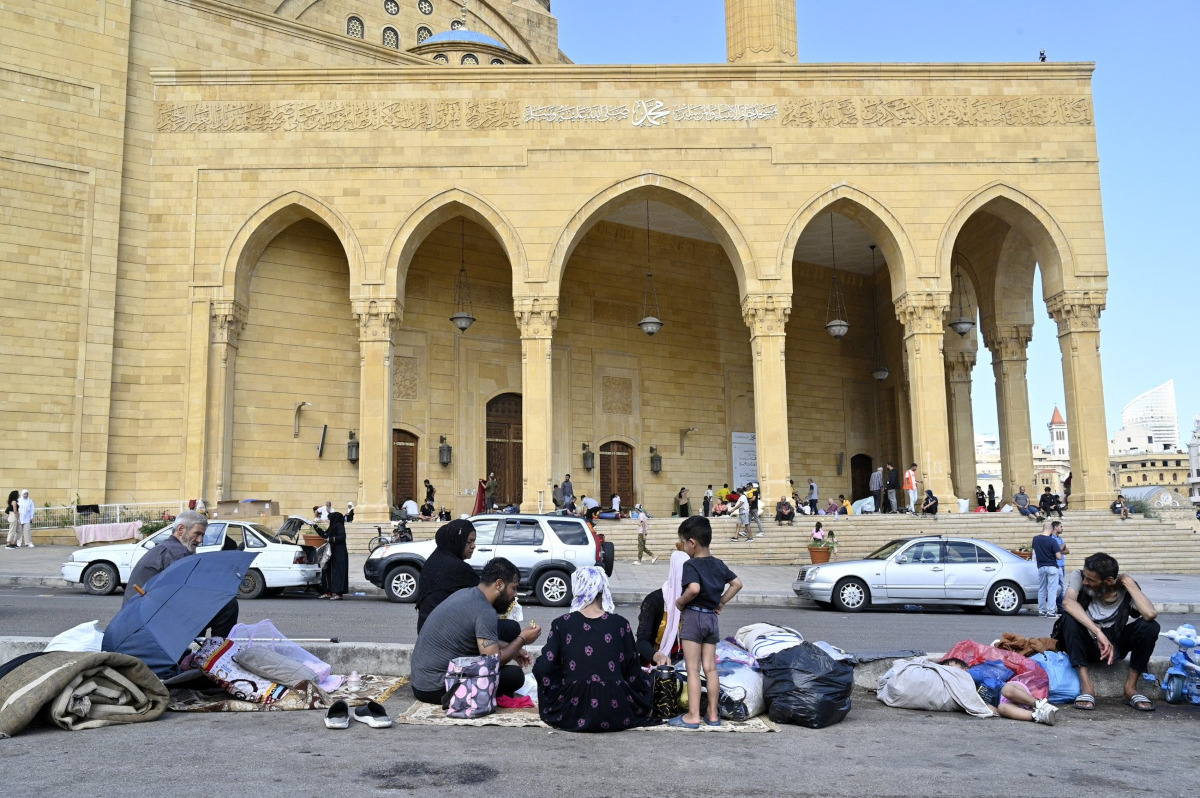
An estimated 1.1 million Lebanese have been displaced by the Israeli War | Image from X
Notably, Defense Minister Israel Katz continued to insist the whole goal of the war is to disarm Hezbollah in comments earlier in the day, in the context of vowing that the invasion of Lebanon would continue irrespective of if the Iran War was resolved.
In the course of laying out their new, occupation-centric policy, officials indicated that the goal was to level any Lebanon villages that the IDF believes had been hosting Hezbollah activities, including effectively every village immediately along the Blue Line. In recent days, the indication is that the war’s focus is increasingly on Lebanese demographics.
IDF officials have sought to reassure Lebanese Christians and Druze that they will be allowed to return to the occupied south, while warning them pointedly not to host any Shi’ites who were expelled from other villages. The occupied region is among the largest Shi’ite homelands in the country.
Lebanon is a heavily multi-faith country, with census estimates putting the number at 32% Shi’ite, 31% Sunni, 16% Maronite Christians, 7.5% Orthodox Christians, and slightly under 7% each of other Christians and Druze. Politics in Lebanon includes multiple set-asides to ensure all faiths are represented politically, and while there are some occasions of religious tensions, the various sects tend to live in their own parts of the country and interact and trade with one another fairly smoothly.
The IDF policy, which is apparently to mandate that Christians and Druze in the south openly persecute displaced Shi’ites, seems to all but ensure that sectarian tensions will be increased, and will give the sense that some of the IDF-chosen groups are on the side of the occupation, even if in practice they have little choice in the matter about which displaced people they accept.