Israeli airstrikes against Lebanon continued throughout Friday, with the casualty toll announced by Lebanon’s Health Ministry soaring to 217 killed and 798 wounded since Monday. Up until today, there had been relatively few reports of Hezbollah successfully inflicting casualties on the Israeli side.
A rocket fired on an Israeli Army position along the border Friday marked the highest such toll reported on the Israeli side, as eight Israeli soldiers were reported wounded in the strike, five of them seriously so. The soldiers belonged to the Givati Brigade, according to Israeli media.
A handful of previous reports had Hezbollah firing anti-tank rockets across the border at Israeli military positions, and injuring two soldiers Thursday evening and two others the day prior.
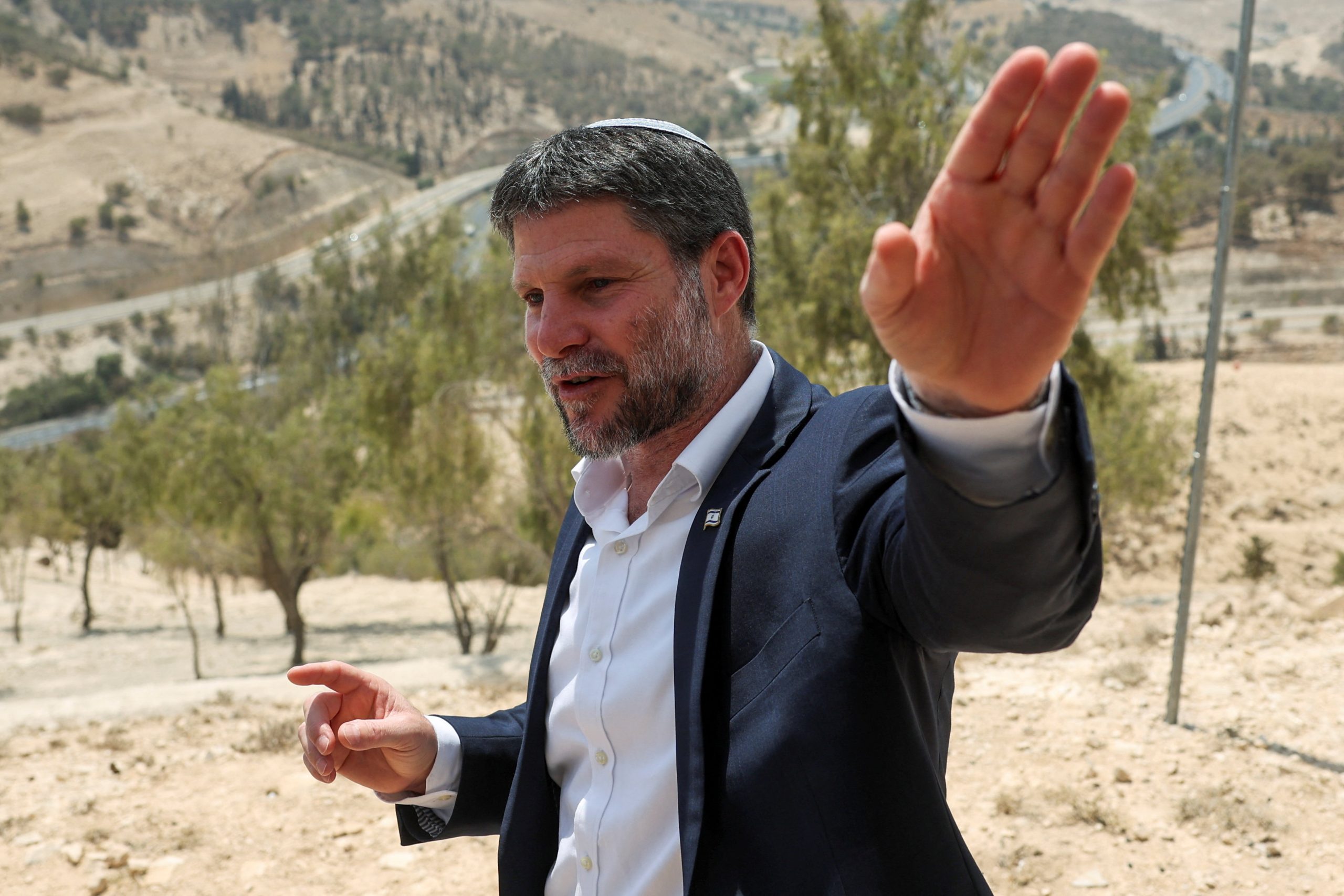
Israeli Finance Minister Bezalel Smotrich gestures, on the day of a press conference regarding settlements expansion for the long-frozen E1 settlement, that would split East Jerusalem from the occupied West Bank, near the Israeli settlement of Maale Adumim in the Israeli-occupied West Bank, August 14, 2025. REUTERS/Ronen Zvulun
Friday’s incident, was not only a much higher toll than the previously reported ones, but among the wounded was the son of Finance Minister Bezalel Smotrich. He was reportedly only lightly wounded, per initial reports.
Minister Smotrich had only the day prior released a video of himself touring military sites along the Lebanon-Israeli border, while declaring that northern Israel would thrive and the Beirut suburb of Dahiyeh, which the Israeli military has been heavily targeting, would soon “look like Khan Younes,” a Gaza Strip city that Israel has effectively leveled in one of its other wars. Within the video Smotrich blessed his son in anticipation of him participating in an invasion of Lebanon’s south.
Recent reports suggested that the Israeli military buildup along the northern border portended a plan to send ground troops even deeper into southern Lebanon. Earlier in the week, Israel ordered all Lebanese civilians to withdraw from the entire area south of the Litani River, an area which spans a broad amount of Lebanese territory and includes substantial cities.
Hundreds of thousands of people have been displaced in Lebanon by the ongoing fighting, and with strikes targeting all regions of the country there seems to be little reason to think that people displaced from one area to another are any less subject to the ongoing strikes. Lebanese officials have warned of a looming humanitarian crisis as a result of the conflict.