Starting Saturday evening, Israel carried out a flurry of airstrikes against southern Lebanon, centering on the Jezzine and Nabatieh Districts. The IDF claimed the buildings targeted were “Hezbollah weapons depots,” though they as usual provided no evidence to that effect.
The Jezzine strikes targeted the towns of Basilya and Sajd, while the Nabatieh strikes targeted the outskirts of Houmin al-Fawqa and Iqlim al-Tuffah. Additional attacks were reported against an unoccupied house outside of Mays al-Jabal.
The IDF narrative was that Hezbollah was violating the ceasefire so much that the Israeli Army targeted Hezbollah facilities. Since the ceasefire went into effect in November of 2024, Hezbollah has not fired a single rocket at Israel.
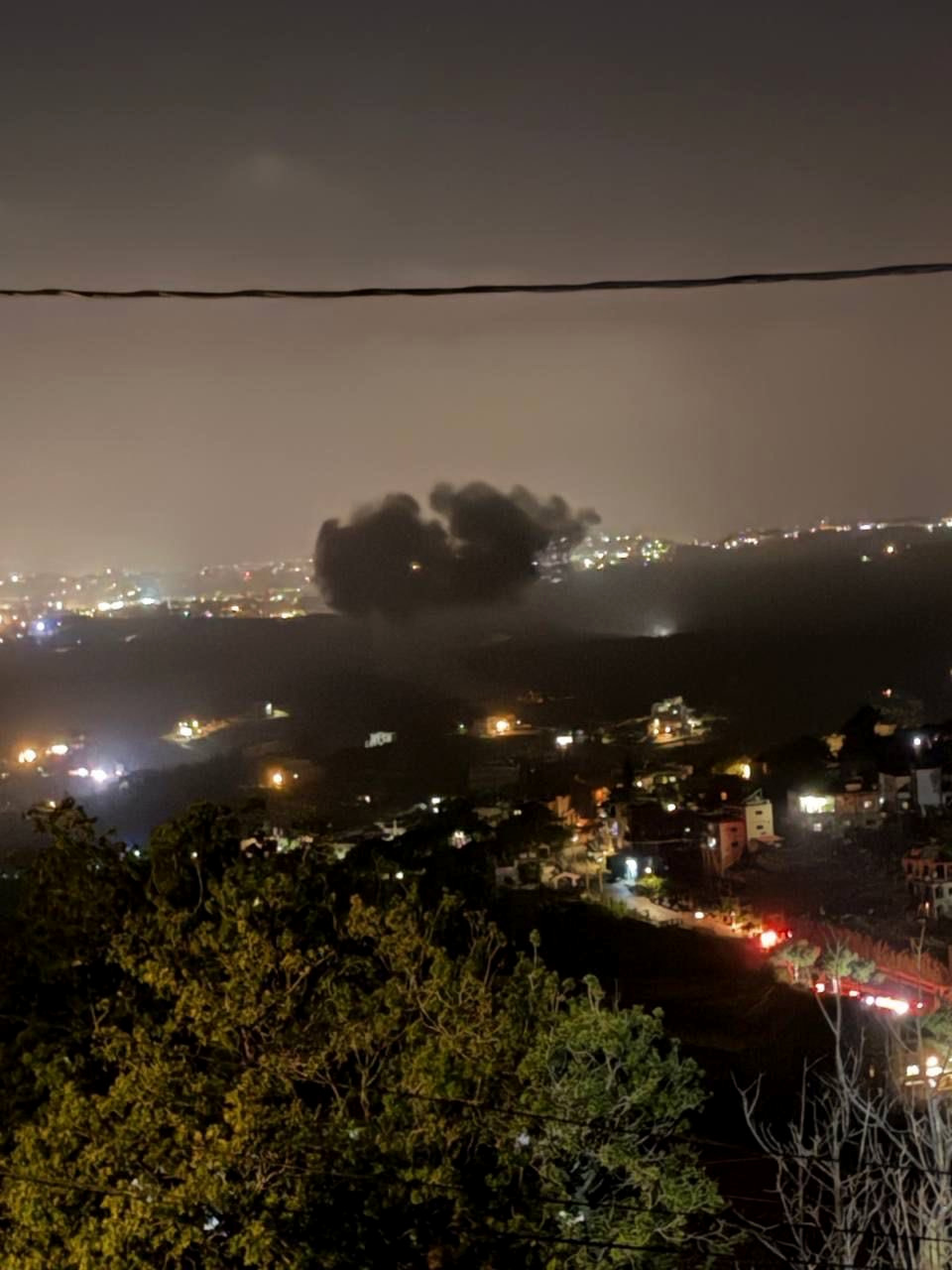
Israeli airstrikes on the outskirts of a southern Lebanese town | Image from X
By contrast, Israel has launched well over 1,000 distinct strikes on Lebanese territory since the ceasefire went into effect, killing several hundred people, a number of whom the UN confirmed to be innocent civilians.
In addition to obviously calling for an end to the airstrikes, the ceasefire was also meant to see Israel withdraw ground troops from Lebanese territory by January of 2025. Over a year later, that similarly has yet to happen.
There have yet to be confirmations of any casualties in Saturday evening’s strikes, and locals are still assessing the extent to which the targeted buildings were damaged. Last month saw a record number of Israeli strikes on Lebanon, and this weekend’s attacks suggest that escalation is still ongoing.