Lebanon’s Army announced in January that they had implemented the plan to monopolize arms under government control south of the Litani River, in line with the ceasefire requirements from the November 2024 ceasefire that ended the Israeli invasion.
Hezbollah, the largest armed faction in Lebanon, cooperated in that case, as was required by the ceasefire, but they object to any plans for the government to do the same thing north of the Litani, and Army Chief Gen. Rodolphe Haykal intends to introduce specific plans next week to do that.
Israel has pushed hard for Hezbollah to be fully disarmed if not outright destroyed, and has claimed at times that Lebanon’s government is obliged to do so, though the terms of the UN Security Council Resolution 1701 don’t mandate that, nor does the 2024 ceasefire.
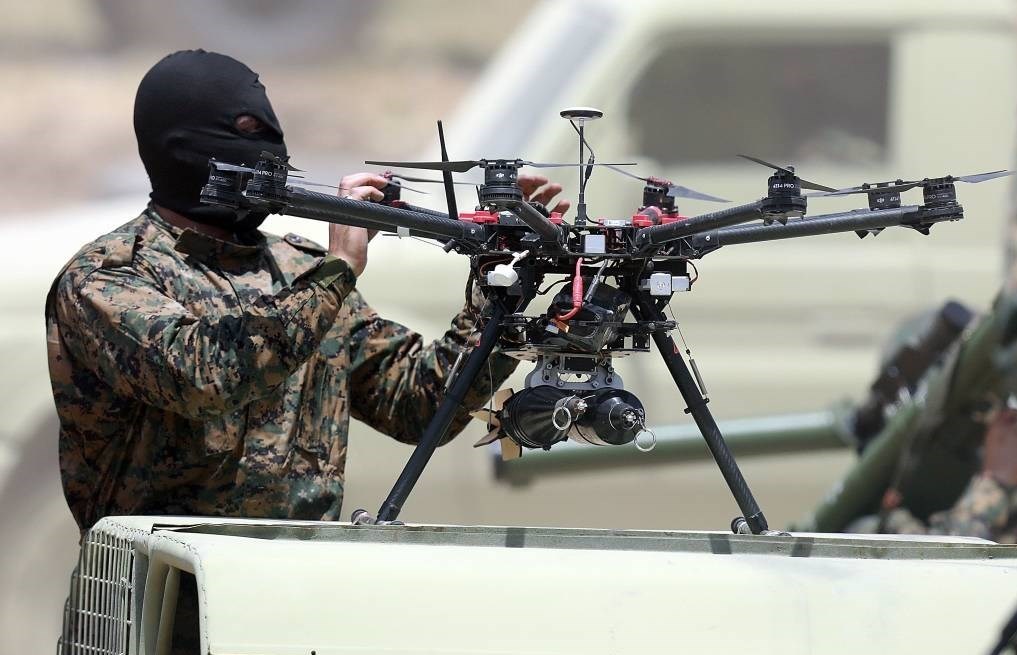
A Hezbollah member participating in a 2023 training exercise | Image is CC 4.0 from Wikimedia
There are reports some of Lebanon’s cabinet are reluctant to move forward with any attempted disarmament north of the Litani without some positive steps from Israel. Presumably this involves Israel ending attacks on Lebanese territory, something that actually was mandated by the aforementioned ceasefire.
In practice Israel has been escalating attacks, not slowing them down, and while they regularly threaten a new war with Lebanon if the disarmament isn’t nationwide, Lebanese officials are reportedly not concerned about that, both because Israel is already attacking anyways and because the US has given them assurances such a war won’t happen.
Influential Lebanese MP Gebran Bassil (son-in-law of former President Michel Aoun) made it clear his position was that the government should ensure a halt to Israeli attacks and a full Israeli withdrawal from Lebanese territory as an attempt to incentivize Hezbollah to agree to disarmament in the north. He added that Hezbollah was not the “enemy” of Lebanon but an integral part of the nation.
Hezbollah MP Ali Fayyad downplayed the need for them to be disarmed at any rate, saying Hezbollah has no active military movements contrary to the Lebanese government north of the Litani to begin with. He claimed others were pressuring Lebanon to monopolize arms as a means to fuel tensions in Lebanon’s north, and warned against “turning the problem from being a problem between Lebanon and the Israeli enemy into a problem between the Lebanese themselves.”
Functionally, the disarmament south of the Litani went relatively smoothly with Hezbollah cooperating, and the delays in the process were primarily related to Israel actively attacking southern Lebanon while the army was trying to take control of former Hezbollah sites. Without Hezbollah’s cooperation, however, it’s unclear if the Lebanese military even could disarm them elsewhere, or if indeed it just leads to a civil war.