A deal between the Syrian government and the Kurdish SDF remains more or less in place in the Hasakeh Governorate, with the central government putting more and more of the former Kurdish-held territory under direct control.
But the latest ceasefire not immediately collapsing like all the others doesn’t mean the situation is really resolved, as the major Kurdish city of Kobane remains under a state of effective siege, with massive displacement and reports of looting of Kurdish villages in the area.
The humanitarian situation is increasingly worsening, according to the UN, even though they also noted a significant decline in the fighting. As recently as Sunday, the Kobane government noted that the Aleppo Governorate’s promises to withdraw troops and lift the siege hadn’t amounted to much of anything, beyond governorate-level officials seeking to formally rename the city to its Arabic name, Ayn al-Arab.
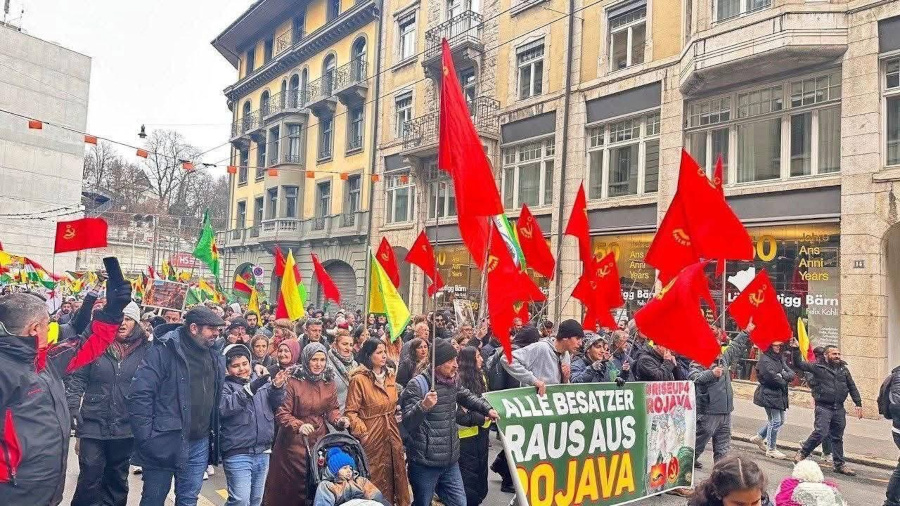
Kurdish demonstrators at a rally | Image from X
Across the rest of what was formally Rojava, the autonomous Syrian Kurdistan region, major demonstrations were reported in the big cities, centering on calls for the Syrian constitution to formally recognize the rights of the Kurdish population and of women. Rallies against the siege of Rojava were also held by the Kurdish diaspora in Europe.
Seeking to codify Kurdish rights in the constitution is a big issue for the minority. President Ahmed al-Sharaa last month issued a decree promising to respect their rights in an attempt to tamp down unrest.
The Kurds, however, noted that former President Assad issued similar decrees promising concessions to the Kurds, and that government officials largely ignored things like the decree promise to grant citizenship to stateless Kurds in Hasakeh Governorate. They instead want an actual constitutional codification of those rights, to preclude it being a temporary promise by a single ruler.