It’s hardly the first ceasefire between the two sides declared over the last week, but Sunday, the Kurdish SDF and the Syrian government announced another ceasefire, one that President Ahmed al-Sharaa says includes a full integration for the Kurds and much of their territory into the central government’s control.
The text of the deal, as released by the Kurds, does commit to transfer military and administrative control of the Raqqa and Deir Ezzor Governorates to the central government. The government also gains control of the oil fields which were heretofore under Kurdish control. SDF forces are meant to relocate fully east of the Euphrates River.
On the other side, the deal calls for the removal of heavy weapons from the Kurdish city of Kobane, and measures to provide for the return of displaced civilians to the city of Afrin. Sharaa is also meant to, through decree, appoint a local governor for Hasakeh Governorate, and ensure local representation.
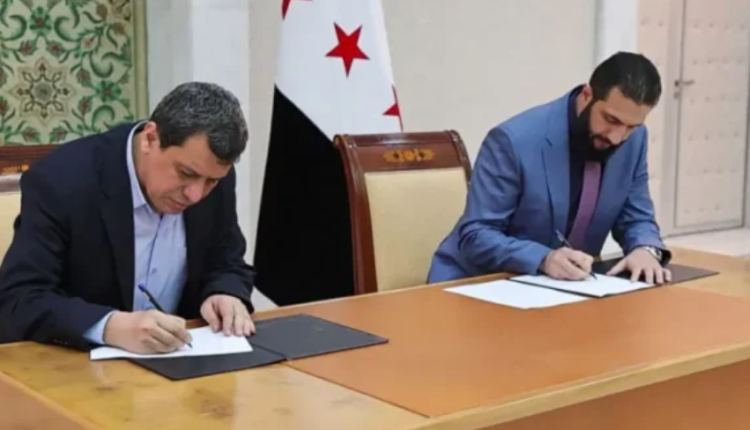
Syrian President Sharaa and SDF leader Abdi sign a ceasefire | Image from SOHR
This caps off two weeks of fighting between the two sides. Initial clashes in Deir Hafer extended to an ugly fight in the city of Aleppo, with the army declaring the Kurdish neighborhoods of the city “closed military zones” and engaging in fighting that displaced over 100,000 people.
The fighting over Aleppo city ended last weekend when the SDF agreed to temporarily withdraw from the city, and while that was meant to be a ceasefire, it fell apart more or less immediately, as the Syrian Army decided to try to press their gains and pushed to seize parts of Aleppo Governorate west of the Euphrates River.
Even that was just the start, as they extended attacks against the SDF not just to the rest of Aleppo Governorate, but into neighboring Raqqa as well. The US urged the SDF to just cede the area east of Aleppo city, which they rejected.
This was in keeping with the Trump Administration’s general support for the Sharaa government, and opposition to the idea of Kurdish autonomy. Sen. Lindsey Graham (R – SC), however slammed the military for attacking the SDF, and threatened to see US sanctions against Syria reinstated if the attacks continue.
Ultimately, the intense offensive led the Syrian military to seize Deir Hafer and Maskana, which were early targets. They also seized a military airport in al-Tabqa. The troops ultimately got control of multiple valuable oil fields, though whether they seized them militarily or got them by way of the ceasefire agreement isn’t entirely clear.
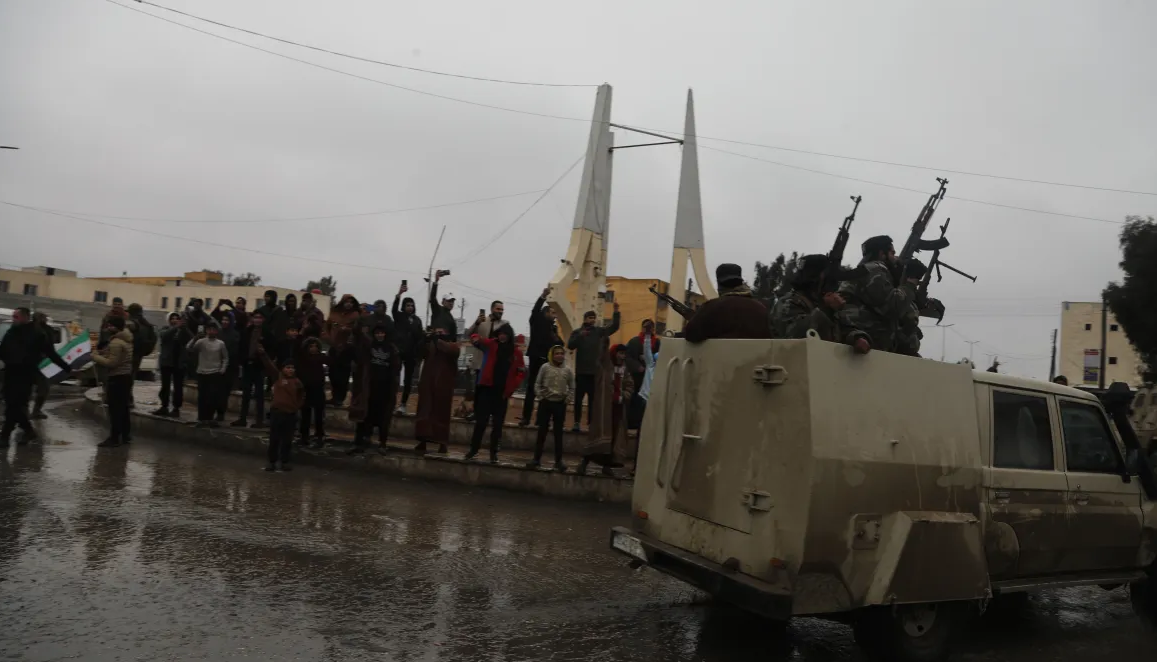
Syrian troops in the city of Tabqa
Clashes continue intermittently in Raqqa city, with armed tribal factions loyal to the central government harassing SDF positions, as the SDF continues to hold prisons and other facilities in the city.
A final death toll from the recent days of fighting is all but impossible to estimate right now. The military claimed two of their soldiers were killed near Maskana, though that was far from the only place heavy fighting took place and presumably just among the casualties, many of which have yet to be announced.
The central government has been keen to gain central control over the entire country and a monopoly on force of arms, and 2025, the first full year the Hayat Tahrir al-Sham (HTS) had power in Syria saw multiple offensives against religious minorities in the country’s periphery, leading to high-profile massacres of civilians.
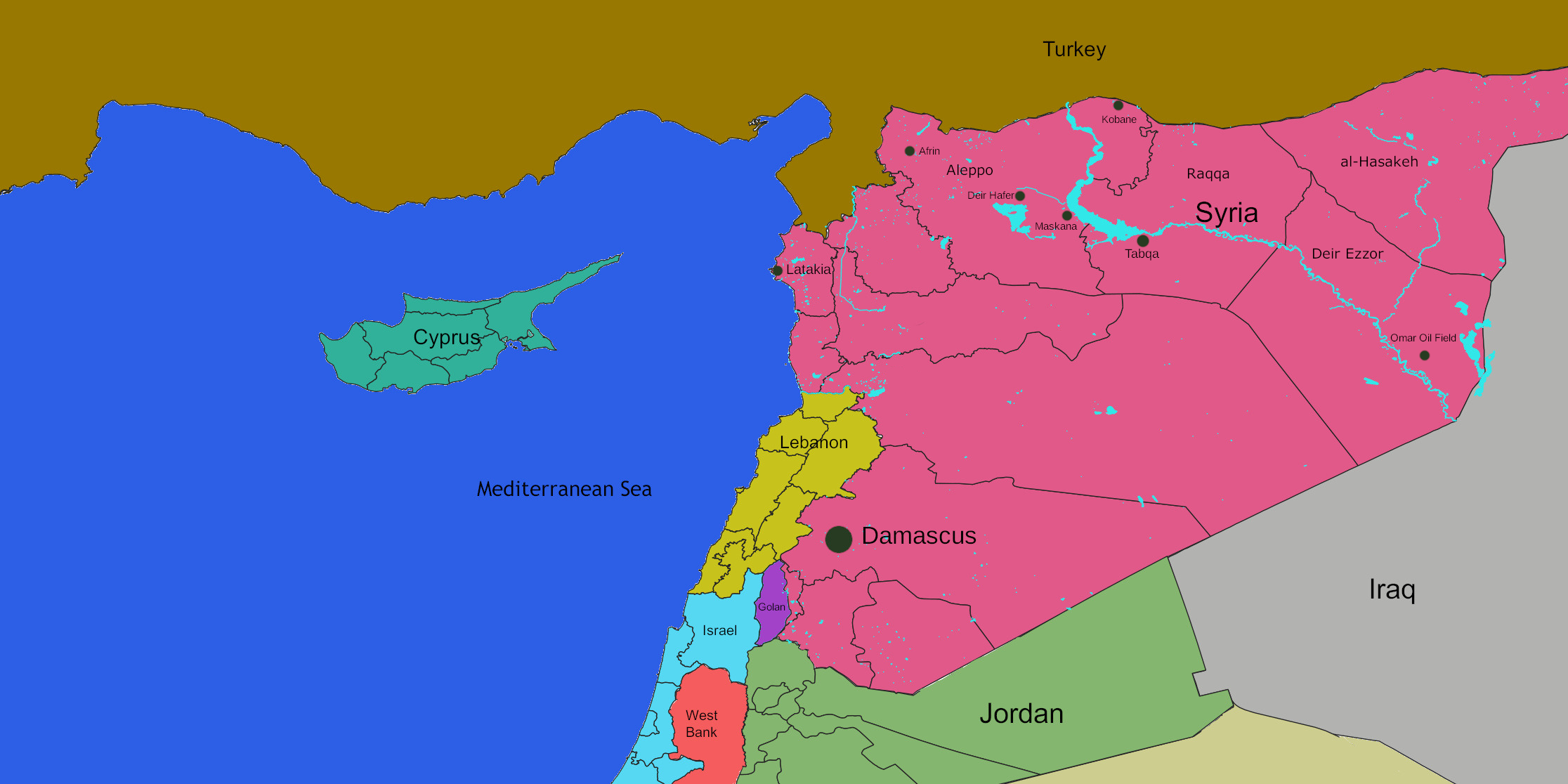
The Kurds, as an ethnic minority, controlled a broad swathe of northeastern Syria by the end of the civil war that brought the HTS to power, and have been loathe to cede control outright to them. The military, however, seems to be forcing the issue, and this has led the military and the SDF to on-again, off-again fighting for months.