The situation in southern Yemen seems to be coming to a head once again, with the Saudi-backed “National Resistance Forces” entering into direct conflict with the UAE-backed Southern Transitional Council (STC), a separatist group that controls an ever-growing amount of Yemen’s south.
The STC grew out of long-standing secessionist ambitions in southern Yemen, which was merged into North Yemen in 1990. When Saudi Arabia invaded Yemen in 2015, the STC pretty quickly emerged and started contesting control of the southern part of the country, which was effectively all the Saudis ever managed to control to begin with.
As it stands, the STC controlled almost all of what was once South Yemen, while the Saudi faction, which styles itself the real government of Yemen, controlled only a portion of Yemen’s western coast. The Shi’ite Houthis, officially known as Ansar Allah, control Yemen’s capital city and a large portion of what used to be North Yemen, an area where most of Yemen’s population lives.
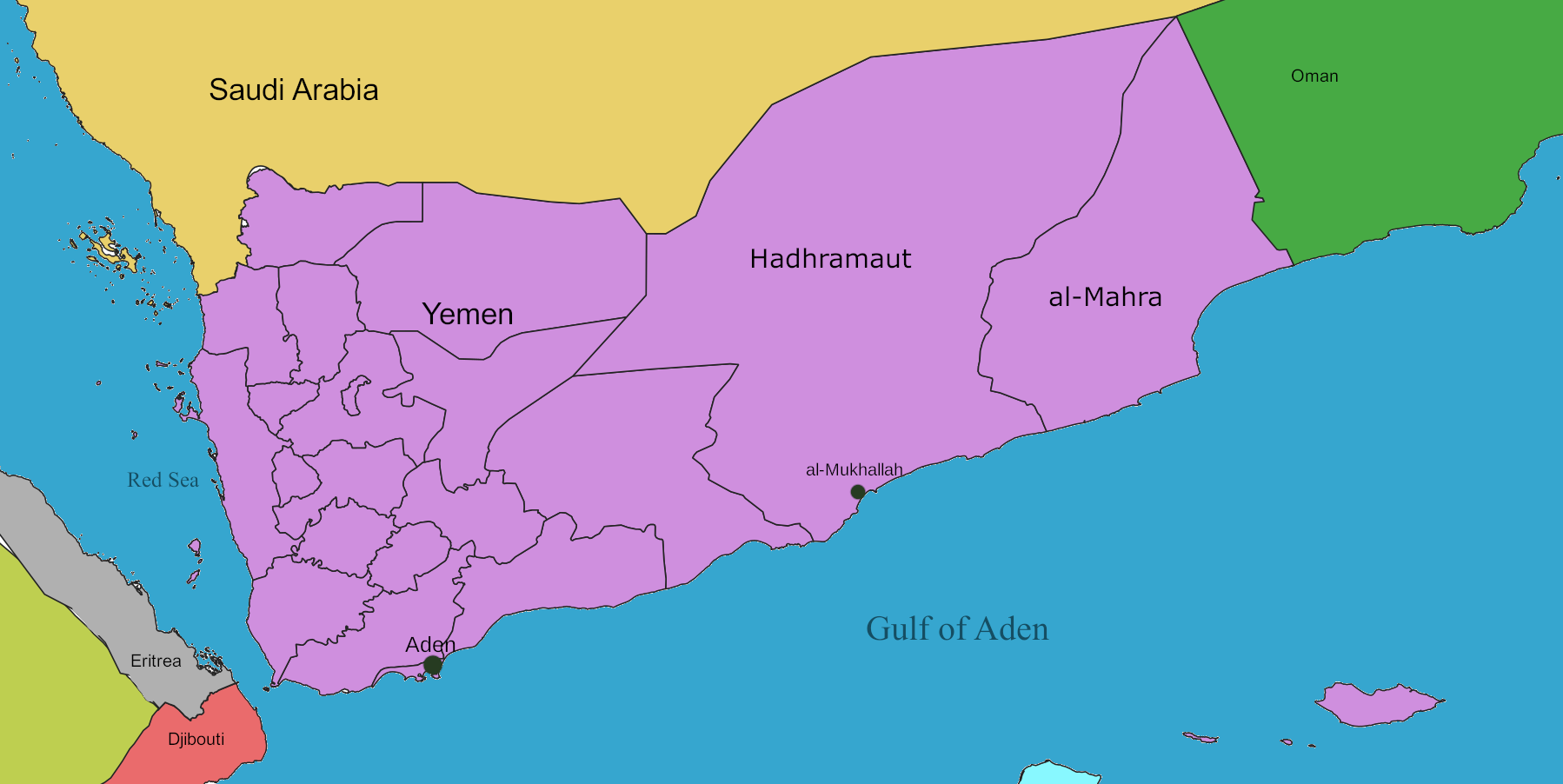
This came to another head with recent fighting between the Saudi-backed faction and the STC, leading the STC to declare their intention to hold a referendum on independence from Yemen, and a warning that if fighting continued they’d eschew the referendum for a unilateral declaration of independence.
Fighting hasn’t stopped, and between heavy airstrikes and ground conflicts, at least 80 STC fighters have been reported killed since Friday, with over 150 wounded and another 130 captured by the Saudis and their affiliate forces.
The Saudi-backed faction claims that all the facilities in the key port city of Mukallah have been retaken and are under their control now. Mukallah is the capital of the key southeastern Hadhramaut Governorate, which extends north into the mountains along the Saudi border.
The claim extended later to say that the Saudi-backed forces control all the districts within Hadhramaut Governorate, and that they had further retaken all of the al-Mahra Governorate. Mahra is the relatively sparsely populated easternmost part of Yemen, along the Oman border.
Territorily, that’s a substantial amount of southern Yemen that has changed hands in the offensive. Hadhramaut is considered far more important because of the natural resources within the mountainous north, though Mukallah is also an import port.
The STC retains South Yemen’s largest city, Aden, however, and while this was a relatively high-profile loss in the decade of historical clashes between UAE-backed and Saudi-backed forces over control of South Yemen, it’s unlikely that the fighting of the last few days is anything like a decisive battle.
The Saudis seem to appreciate that, calling for dialogue to be held among the factions in Riyadh to try to come to a “just solution to the southern cause.” In Saudi terms, that likely means avoiding immediate secession, though the goal of an independent South Yemen predates the Saudi invasion and will likely endure, even if a deal is reached to calm the recent fighting and the immediate threat of a referendum.