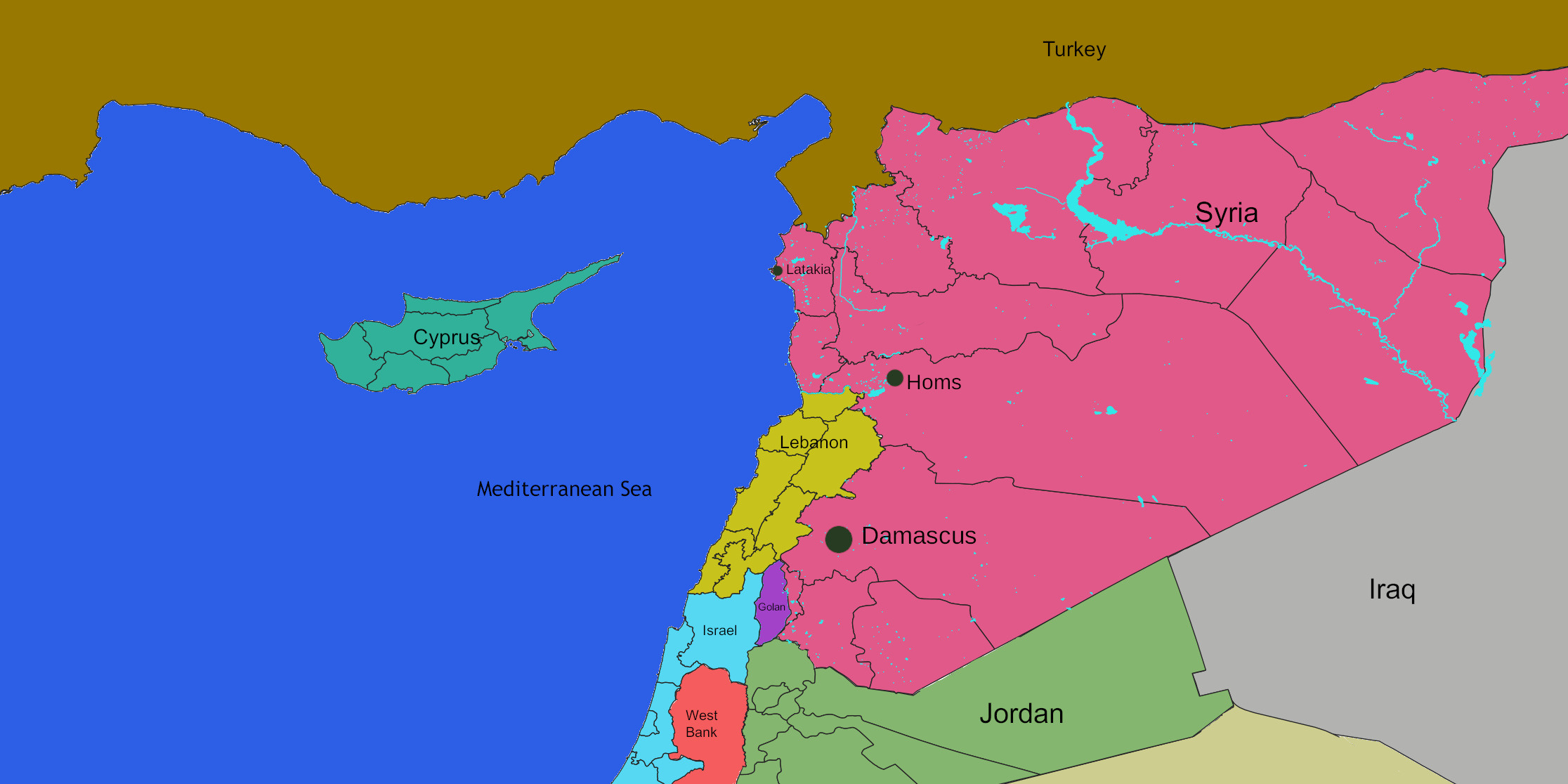
A weekend bombing of an Alawite mosque in the Syrian city of Homs sparked major protests by Alawites across Syria’s northwest, and led to a quick crackdown by the government, which has declared the protesters “Assad remnant forces.”
Latakia, a major Alawite city, was one of the major targets of the crackdown, with attacks on Alawite neighborhoods leading to the arrest of 21 people within the city, who government forces similarly labeled Assad remnants.
The government also announced that a city-wide curfew overnight in Latakia, saying that they were restoring calm in the area, and accusing “wanted individuals linked to remnants” of diverting the protesters to attacks on security forces. In practice there were reports of security forces cracking down on protesters across the region almost immediately once the demonstrations began.
The Hayat Tahrir al-Sham (HTS) government, which seized power in December of 2024, has promised unity across religious minorities, but in practice the Islamist group has participated in multiple high-profile massacres against those minorities, including the March massacre of Alawites in the northwest and the July massacre against the Druze in the south.
The HTS has tried to downplay its involvement in those massacres, promising investigations, though the amount of accountability has so far been quite limited. The government narrative also plays up the idea that the Alawites in particular are disproportionately in league with the ousted Assad government.
This narrative plays because President Assad was himself an Alawite, so there is a sense they were given special treatment under his regime. Though Assad’s family often got choice government positions, ordinary Alawites argue they weren’t treated particularly well by Assad either, and were similarly glad to be rid of him.
A year after the last of Assad’s forces fled the country, it’s not clear how much of a real “remnant” force remains anywhere within Syria, though the notion is often pressed by the HTS when they face even token signs of unrest, and when the government cracks down on anything with the appearance of a Shi’ite or Alawite angle, that is the default excuse.
Interestingly, while remnant forces remain an HTS talking point, the government’s effort to calm Alawite unrest has taken a controversial angle of offering “amnesty” for Alawite fighters who come out of hiding.
The plan has led some of the Alawite militias caught up in the fighting ahead of the March massacre of Alawite civilians to reemerge, but since they were branded important Assad loyalists, whether correctly or incorrectly, there is a backlash against them in the rest of the country, and opposition to the amnesty.
With the HTS’ own origin as an al-Qaeda affiliate, many of their auxiliaries and allies are Sunni Islamist factions, and only too eager to use any pretext to attack the Alawites. Whether this amnesty attempt will successfully calm the region or inadvertently give HTS-aligned groups a pretext to go after the Alawites even harder remains to be seen, but it certainly adds to the HTS-advanced notion that Alawites are necessarily part of an Assad-led movement.