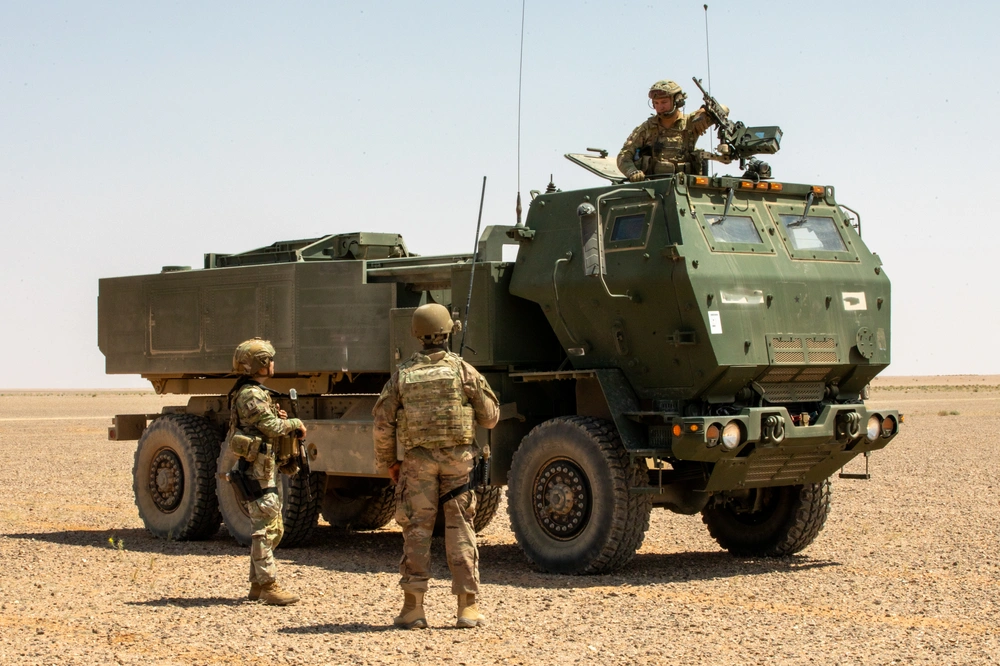
An attack that targeted US troops in central Syria on Saturday has drawn attention to the presence of National Guard soldiers in the country and their use in combat zones in the Middle East and Africa.
The attack, perpetrated by a member of the Syrian government’s security forces, killed two members of the Iowa National Guard and a civilian interpreter. Another three members of the Iowa National Guard were injured.
“Sending National Guard members to die in undeclared wars is a betrayal of both the Constitution and the people who serve,” Dan McKnight, the founder of Bring Our Troops Home, wrote on X.
Bring Our Troops Home leads a project called Defend the Guard, which promotes state-level legislation that would prohibit the federal government from deploying the state’s National Guard to a combat zone where Congress hasn’t officially declared war, something that hasn’t happened since World War II.
“Syria proves the point again. The Guard exists for defense, not endless imperial drift. Defend the Guard,” McKnight said, adding a link for a petition that can be signed in support of Defend the Guard. Go to the Defend the Guard website to see whether the legislation has been introduced in your state and to find ways to support the movement.
Since the US frequently deploys National Guard soldiers to Syria, Iraq, and Somalia, restricting that ability would significantly impact the federal government’s ability to wage unconstitutional wars. The legislation has passed through several state legislators, but it has yet to become law.
Liam McCollum, a podcaster and activist working to advance Defend the Guard in Montana, explained in a post on X how the National Guard was never meant to be deployed to overseas conflicts.
“Founded in 1636 — long before the Constitution or the modern National Guard — the militia was meant to be distinct from a general army. As James Madison argued in the Virginia Ratifying Convention, no free government would ‘drag the militia unnecessarily to an immense distance,'” McCollum wrote.
“Accordingly, the Framers treated the militia differently from the army: reserving general authority over it to the states, while permitting the federal government to use it only to execute the laws, suppress insurrections, or repel invasions,” he added.