Struggling to come to grips with the notion of cause and effect, Secretary of State Hillary Clinton claimed in a recent speech that she believes the recent attack on the US Consulate in Benghazi was the result of the “powder keg” of terrorist activity in Mali.
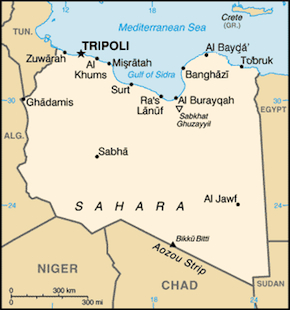 There is no indication from any of the reports that the attack had anything to do with any Malian faction, and was blamed on a local militant faction called Ansar al-Sharia Benghazi (ASB).
Indeed, lost in all of this is that the Mali situation, with the northern half of Azawad now under the control of Ansar Dine, is itself a direct result of the 2011 US attack on Libya in the first place. The US attacks left massive weapons caches in Tripoli unguarded, looted by Tuareg mercenaries fighting in Libya. The Tuaregs returned to Mali to launch a secessionist war in Azawad, which eventually left Ansar Dine in charge.
Instead of correctly seeing Mali as a consequence of their ill-conceived intervention in Libya, the Obama Administration is trying to spin the effect as the cause, and use it as an excuse for military intervention in Mali.