In an interview with USA Today, the top US commander in Afghanistan General Stanley McChrystal expressed hope that the continually worsening violence in Afghanistan could be curbed if the US was able to improve the economy enabling them to find jobs.
 Gen. McChrystal claimed that many of the “mid- and low-level commanders and fighters have a tremendous interest in trying to reintegrate into Afghan society” and suggested they might be persuaded to stop if they could find jobs and if the US created “functioning local governments” in the area.
After three decades of war and multiple foreign occupations, Afghanistan has very little in the way of an economy and much of the country depends on agriculture, not exactly a lucrative business in a nation with inclement weather and little arable land.
One of the few crops which farmers have been able to make money on is poppies, but the US military has been destroying their crops and officials have ordered troops to kill anyone caught dealing in the banned crop. Farmers growing other crops haven’t been spared from the violence either, as last week a US helicopter mistook a group of cucumber farmers for hardened terrorists and killed five of them.
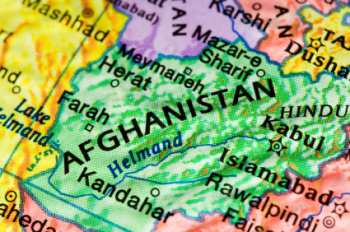
The strategy isn’t exactly novel. Indeed, as with its massive ground offensive in the Helmand River Valley last month the US seems to be taking a page out of the Soviet Union’s playbook. Roughly eight years into its own failed occupation of Afghanistan the Soviets began to pump enormous amounts of money into boosting Afghanistan‘s largely command economy in the hopes of buying off the insurgency with jobs.
Needless to say, it didn’t work, and over 20 years later the next set of invaders is still looking at a country with little discernable economy and hoping to create one, part of its own “civilian surge.” When the Soviet occupation reached this stage it had already virtually bankrupted the nation and they had to withdraw. The US and its allies, on the other hand, seem content to throw troops and money at the problem more or less ad infinitum, with British officials openly talking about a 40-year war. One can’t help but wonder, however, how another 40 years of war is going to leave Afghanistan any better off than the less 30 years did.