On Monday, Maj. Robert “Magyar” Brovdi, commander of Ukraine’s Unmanned Systems Forces, was profiled by Hannah Arhirova in The Associated Press. While Brovdi emphasized the strategic importance of conducting deep drone strikes within Russia, this summer he has been focused closer to home.
Since June, Brovdi has been tasked with waging an escalated drone offensive against Crimea, an attempt to deny Russia the use of the Black Sea peninsula as a military staging area. “Crimea falls within the key conceptual pillars on the path to ending the war,” he said.
Crimea was seized from Ukraine and annexed by Russia in 2014, following a Western-backed coup that ousted Ukrainian President Viktor Yanukovych. At the time, Ukrainian nationalists threatened to kick Russia out of its only year-round warm-water naval base in Sevastopol, Crimea, thereby denying Russia direct access to the Mediterranean Sea.
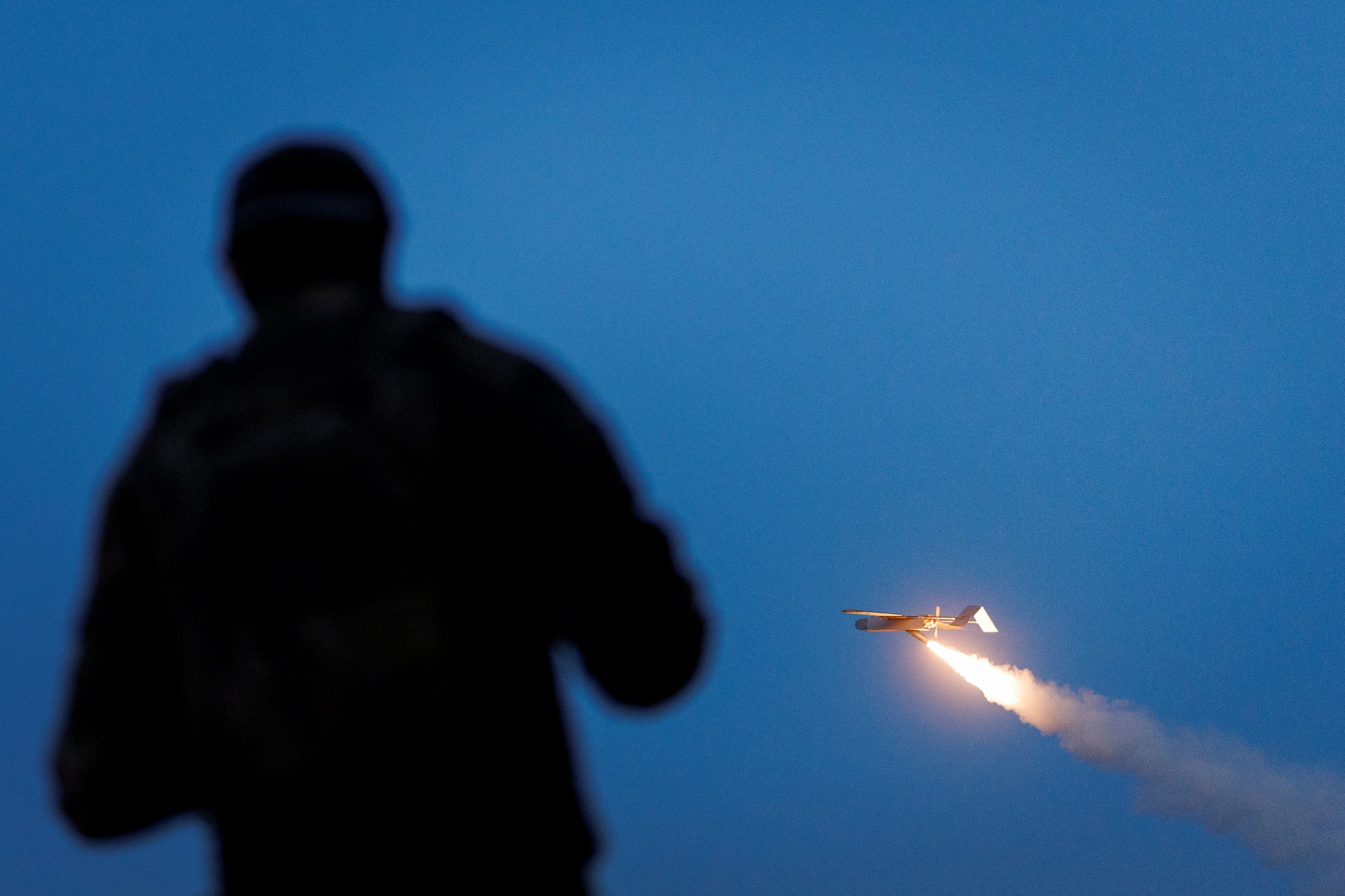
The summer drone offensive has hit Russian air defenses, supply lines, railways, oil infrastructure, and power plants. On June 19, a Ukrainian drone attack on an oil refinery in Kerch, Crimea killed four civilians, wounded 28 additional civilians, and forced the government in Crimea to halt gas sales.
Brovdi claimed his drone war on Crimea is only running at 14 percent of its potential full capacity. He said his drone army could be hitting up to seven times as many targets in Crimea but for a lack of funding.
“It’s not that the production capacity of Ukrainian manufacturers doesn’t allow us to make the necessary quantities” of drones, Brovdi said. “It’s the banal problem of untimely financing, which our partners do allocate, but which moves significantly slower than our plans.”
Those “partners,” of course, are the US and NATO. While the full extent of American and NATO support for Ukrainian long-range strikes within Russia remains classified, Ukraine has used intelligence from the US and NATO to conduct its long-range drone attacks.
The United States assisted in building Ukraine’s drone industry, and, without Western funding, the current wartime government of Ukraine could not exist. And now, a senior Ukrainian military commander has admitted that Ukraine cannot escalate its war with Russia the way it desires and intends to unless more money is poured in from America and NATO. Since 2022, when Russia directly invaded Ukraine, the United States and its NATO allies have provided Ukraine with more than $350 billion in military, financial, and humanitarian aid.