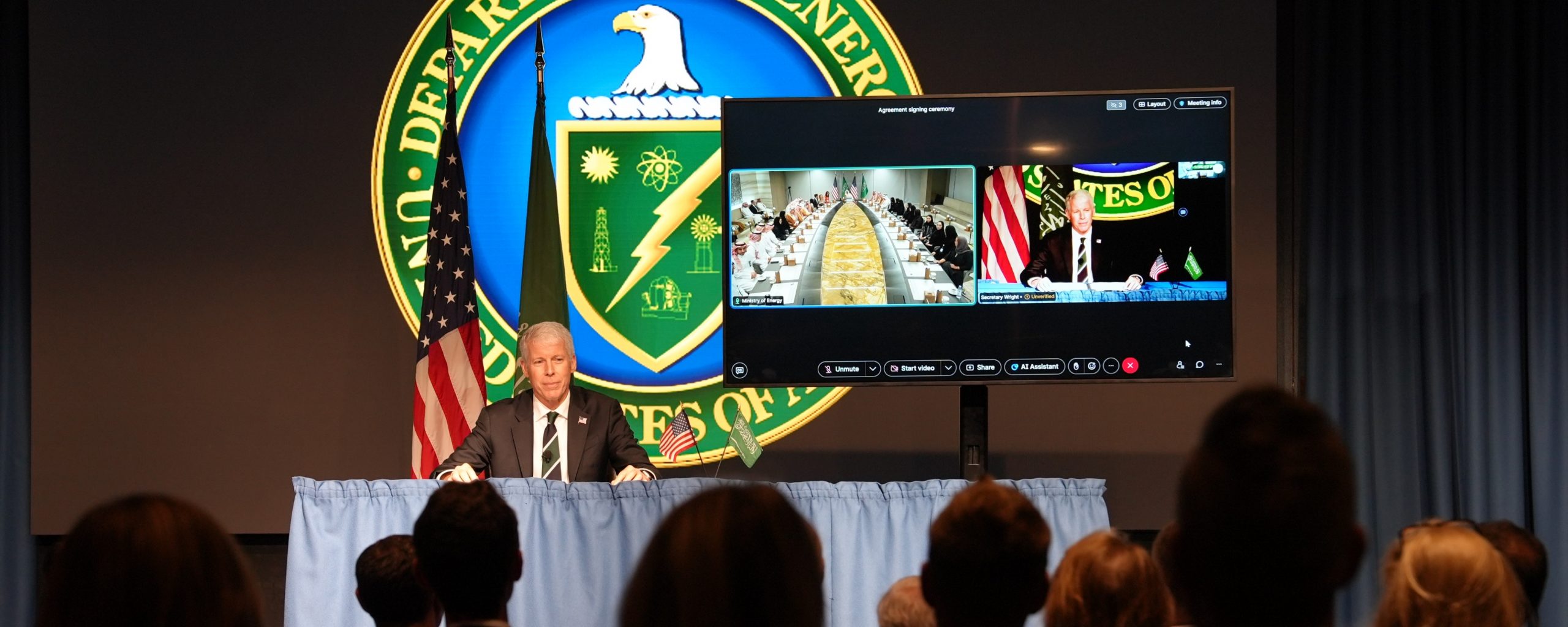
The US and Saudi Arabia signed a nuclear agreement on Wednesday under which Washington will help Riyadh establish a nuclear program that could lead to uranium enrichment on Saudi soil.
The Energy Department said that US Energy Secretary Chris Wright and his Saudi counterpart, Abdulaziz bin Salman Al Saud, signed a deal known as a 123 Agreement, named after Section 123 of the Atomic Energy Act of 1954. The deal lays out terms for the transfer of US nuclear technology to Saudi Arabia.
According to The New York Times, the deal includes a provision that, after a joint study with Saudi Arabia on the economics of producing nuclear fuel, the Saudis may be allowed to enrich uranium or reprocess plutonium on their soil. The agreement is notably different than the 123 Agreement the US signed with the UAE in 2009, which didn’t allow uranium enrichment.
The deal comes as the US is waging a war against Iran that was launched in part over Iran’s refusal to give up its uranium enrichment program, which has been effectively suspended since the June 2025 US airstrikes on Iranian nuclear facilities.
During negotiations between the US and Iran before the US and Israel launched the current war, the US demanded that Iran give up all uranium enrichment, and wouldn’t accept Tehran enriching at levels far below what is needed for weapons-grade uranium. A common talking point among Trump administration officials was that a country like Iran that has a lot of oil and natural gas doesn’t need an enrichment program.
“Iran wants to enrich some uranium, they don’t need it with so much oil. I’m not satisfied. There will be no enrichment, not even to 20%,” President Trump said on February 27, 2028, the day before he started bombing Iran. Saudi Arabia has more proven oil reserves than Iran and holds the second-largest in the world, behind only Venezuela.
Critics have warned that the US-Saudi deal won’t do enough to prevent the Saudis from developing nuclear weapons in the future, while the Energy Department said the two countries also signed a safeguards agreement that would prevent proliferation.
“Rest assured, these agreements uphold the highest standards of nuclear safety and nonproliferation, while relying on the world’s best nuclear technology and scientists, designed right here in the United States,” said Chris Wright.