Iran has reaffirmed that the Strait of Hormuz remains closed to all traffic despite US claims to the contrary and US airstrikes against the country, which continued on Sunday.
“Due to recent unlawful movements by United States military forces in the region, transit through the Strait of Hormuz is currently not possible,” said Iran’s recently created Persian Gulf Strait Authority (PGSA).
“As soon as stability and calm are restored, all requests will be reviewed according to scheduling and the necessary permits will be issued,” the agency added.
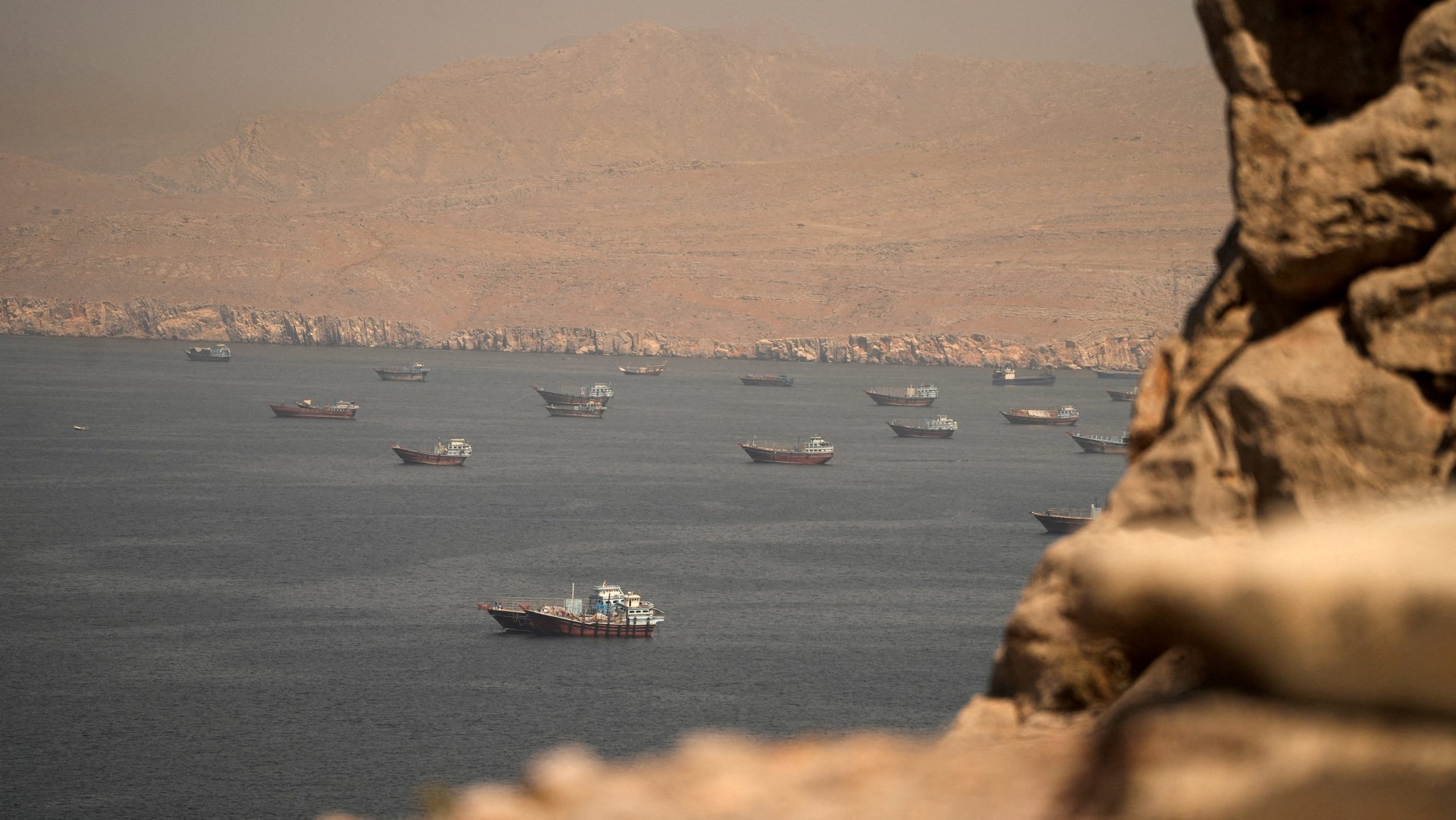
Also on Sunday, US Central Command insisted that the Strait of Hormuz was open and said that US forces are “positioned and prepared to ensure that freedom of navigation remains available despite unwarranted Iranian aggression, harassment, threats, and arbitrary declarations. Iran does not control the strait.”
Iranian media reported that Iran’s Qeshm Island was targeted with up to 11 “enemy projectiles,” and a US official told Axios reporter Barak Ravid that the US had conducted “a few strikes on missile and air defense systems as well as IRGC small boats at a couple of locations around the Strait of Hormuz.”
Later on Sunday, CENTCOM announced it was launching yet another round of strikes against Iran, and a US official told The New York Times that it would be a “bigger” round of attacks than those conducted earlier in the day.
The strikes came after Iranian forces launched retaliatory attacks targeting US bases in Jordan, Kuwait, Bahrain, and Oman following US bombings that hit Iran on Saturday.
Iran warned last week that it would close the strait to all traffic if the US continued bombing the country. The US framed its airstrikes as a response to drone attacks on commercial ships attempting to cross the strait without coordinating with Iran, as Iranian officials have maintained that the US-Iran Memorandum of Understanding (MoU) established that Tehran is solely responsible for traffic through the waterway and that any other arrangements violate the agreement.
Now that the MoU and ceasefire between the US and Iran have collapsed, the US goal appears to be to force Iran to open the strait by bombing the country. On Friday, US officials told The Associated Press that the US was demanding Iran publicly declare the strait was open, a demand Tehran has clearly rejected.
US officials are trying to portray the attacks on ships and stance on the strait as the work of “rogue” factions within the Iranian government, but an Iranian official speaking to Drop Site News reporter Jeremy Scahill said the narrative was a disinformation campaign.
“This wasn’t random—it was a very deliberate and coordinated media campaign designed to pressure us into changing our decision,” the official said. “We had already clearly told the Qataris and Omanis about our firm and final decision: Iran will not allow anyone to disrupt our security and oversight management of the Strait of Hormuz.”
Publicly, Iranian officials have maintained a unified front and continue to make clear that Iran will control the strait. “The era of one-sided deals is OVER,” Iranian Parliament Speaker Mohhamad Bagher Ghalibaf wrote on X on Sunday, sharing a photo of the MoU text stating that Iran will “make arrangements” for transits through the strait. “We told you: keep your word or pay the price. Reality is knocking,” he added.