Sen. Lindsey Graham on Sunday backed President Trump’s suggestion that any deal with Iran could be tied to expanding the Abraham Accords, the diplomatic deals under which the UAE and Bahrain normalized relations with Israel in 2020.
But the idea of normalizing relations with Israel has very little support among the Gulf Arab countries that have not done so, which include Saudi Arabia, Qatar, and Oman, as Israel continues its occupation of territory in Gaza, the expansion of settlements in the West Bank, and its war in Lebanon.
According to a report from Axios, Trump suggested the idea in a call with regional leaders and was met with silence. “There was silence on the line and Trump joked and asked if they are still there,” an unnamed US official told Ravid.
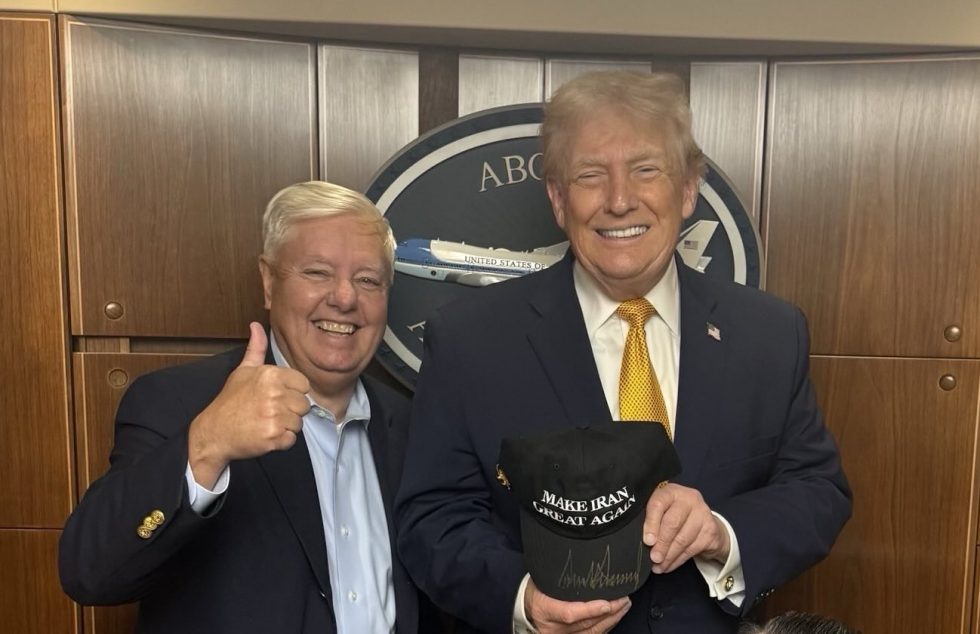
Despite the lack of support for expanding the Abraham Accords, Graham showed strong support for the idea. “If in fact as a result of these negotiations to end the Iranian conflict, our Arab and Muslim allies in the region agreed to join the Abraham Accords, it would make this agreement one of the most consequential in the history of the Middle East,” he wrote on X.
“To Saudi Arabia and others: Now is the time to be bold for the future of a new Middle East. I expect, as President Trump has suggested, you will in fact join the Abraham Accords effectively ending the Arab-Israeli conflict,” Graham added.
The notoriously hawkish senator also said that if regional countries refuse to open diplomatic relations with Israel, it “will have severe repercussions for our future relationships and make this peace proposal unacceptable” and urged President Trump to “stick to your guns in getting a good deal with Iran. Equally important, stick to your guns in insisting Saudi Arabia and others join the Abraham Accords as part of these negotiations.”
Graham’s praise for Trump’s Iran strategy came just a day after he expressed alarm over reports that the US and Iran were close to a deal that would end the US blockade of Iranian ports and open the Strait of Hormuz to more traffic as the two sides hold negotiations on the nuclear issue.
“If a deal is struck to end the Iranian conflict because it is believed that the Strait of Hormuz cannot be protected from Iranian terrorism and Iran still possesses the capability to destroy major Gulf oil infrastructure, then Iran will be perceived as being a dominate force requiring a diplomatic solution,” Graham said on Saturday.
He said such a situation would be a “major shift of the balance of power in the region and over time will be a nightmare for Israel” and questioned what the point of the war would have been. “Also, it makes one wonder why the war started to begin with if these perceptions are accurate. I personally am a skeptic of the idea that Iran cannot be denied the ability to terrorize the Strait and the region cannot protect itself against Iranian military capability,” he added.
Graham’s change in tune reflects reporting that a deal appears to be less likely now than it was on Saturday. It also suggests he may have spoken to Trump about the situation, as the two are known to be in close contact, though the president appeared to respond to the criticism of a potential deal from Iran hawks.
“If I make a deal with Iran, it will be a good and proper one, not like the one made by Obama, which gave Iran massive amounts of CASH, and a clear and open path to a Nuclear Weapon. Our deal is the exact opposite, but nobody has seen it, or knows what it is. It isn’t even fully negotiated yet,” Trump wrote on Truth Social.
“So don’t listen to the losers, who are critical about something they know nothing about. Unlike those before me who should have solved this problem many years ago, I don’t make bad deals!” he added.