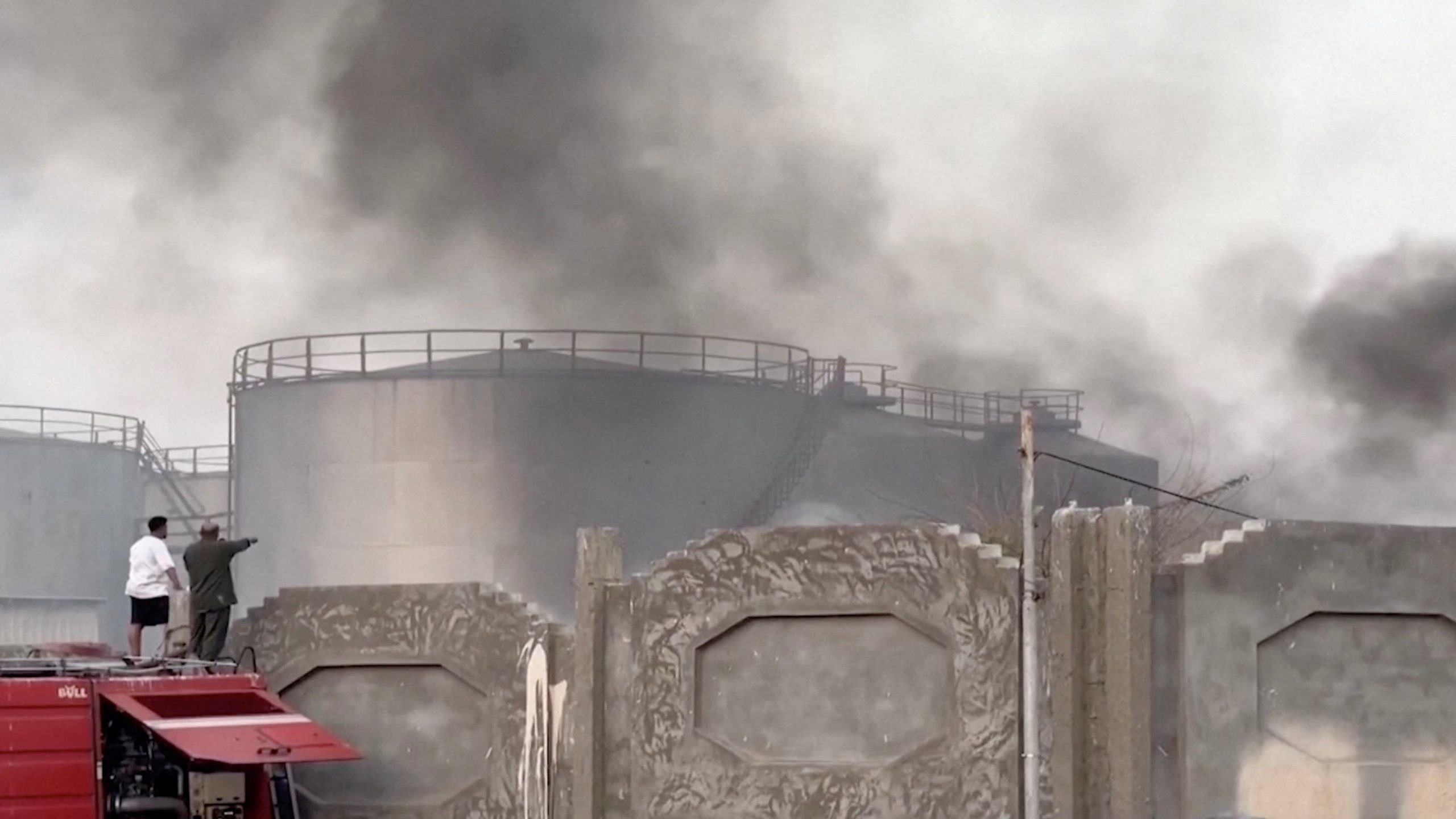
Saudi Arabia on Tuesday bombed the southern Yemeni port city of Mukalla, claiming to target a weapons shipment bound for the UAE-backed Southern Transitional Council (STC), which has taken territory from Saudi-backed forces in recent weeks. It’s unclear at this point if there were any casualties in the strikes.
Riyadh said it targeted an arms shipment after ships from the UAE arrived at the port. “The ships’ crew had disabled tracking devices aboard the vessels, and unloaded a large amount of weapons and combat vehicles in support of the Southern Transitional Council’s forces,” the Saudi military said in a statement, according to The Associated Press.
“Considering that the aforementioned weapons constitute an imminent threat, and an escalation that threatens peace and stability, the Coalition Air Force has conducted this morning a limited airstrike that targeted weapons and military vehicles offloaded from the two vessels in Mukalla,” the statement added.
The UAE’s Foreign Ministry denied the Saudi claims but said that it had shipped vehicles to its own forces in Yemen and that Riyadh was aware of the shipment. “The ministry confirms that the shipment concerned did not include any weapons, and that the vehicles unloaded were not intended for any Yemeni party, but were shipped for use by UAE forces operating in Yemen,” the ministry said.
The UAE’s Defense Ministry later announced that it was pulling troops out of Yemen. “The Ministry of Defense announces the termination of the remaining counterterrorism teams in Yemen,” the ministry said, according to The Cradle, adding that the move came “of its own volition, ensuring the safety of its personnel, and in coordination with relevant partners.”
The Saudi strikes demonstrate fractures among the Gulf powers and the anti-Houthi coalition in Yemen, which formed the Presidential Leadership Council (PLC) back in 2022 when the Saudis gave up on their goal of re-installing former Yemeni President Abdrabbuh Mansour Hadi in Sanaa, which has been under Houthi control since 2014.
The PLC includes members of the STC, which seeks an independent South Yemen, Saudi-backed forces, and members of the former Yemeni government based in Saudi Arabia. Rashad al-Alimi, the head of the PLC, who has been based in Saudi Arabia since 2015, issued a statement declaring a “state of emergency” in response to the recent STC territorial gains and called for the group to withdraw from the areas it has captured. Al-Alimi also demanded that all Emirate forces leave Yemen within 24 hours.
Aidarous al-Zubaidi, the head of the STC and deputy chair of the PLC, harshly criticized al-Alimi’s statement, saying it violated the agreement that formed the PLC. “What was issued by the Chairman of the PLC constitutes a clear violation of the Declaration of the Transfer of Power, which explicitly stipulates that the Presidential Leadership Council is a collective body whose decisions are to be made by consensus, or by majority when consensus is not possible,” he said.
The Houthis, officially known as Ansar Allah, govern an area of Yemen where about 70% to 80% of Yemenis live and control most of the territory that used to comprise North Yemen before North and South Yemen became one country in 1990. The STC seeks to re-establish South Yemen, which goes against the Saudis’ initial goal in Yemen of re-establishing a central government in Sanaa.
The US strongly backed the Saudi/UAE-led war against the Houthis, officially known as Ansar Allah, from 2015 to 2022, which involved a brutal bombing campaign led by Saudi jets provided with support from the US military, as well as a blockade. According to the UN, the war killed at least 377,000 people, with more than half dying of starvation and disease caused by the siege.
In 2024 and 2025, the US launched its own bombing campaign against the Houthis over Ansar Allah’s blockade on Israeli shipping and attacks on Israel, which came in response to the IDF’s genocidal campaign in Gaza. President Trump’s bombing campaign in Yemen this year was especially brutal, killing more than 250 civilians in about a month and a half.