Iran on Tuesday confirmed that Ali Larijani, the head of Iran’s Supreme National Security Council, was killed by an overnight Israeli strike, the most significant Iranian leader to be assassinated since Supreme Leader Ayatollah Ali Khamenei was killed in the opening strikes of the war.
“After a lifetime of striving for the elevation of Iran and the Islamic Revolution, he finally reached his long-cherished wish, answered the call of truth, and proudly attained the blessed rank of martyrdom in the service front,” the Supreme National Security Council said in a statement carried by Iran’s Mehr news agency.
Iran’s PressTV reported that Larijani was killed alongside his son, Morteza Larijani, and the head of his office, Alireza Bayat, as well as several bodyguards.
Earlier in the day, Israeli Defense Minister Israel Katz said that Larijani and Gholam Reza Soleimani, the head of the Islamic Revolutionary Guard Corps volunteer Basij force, were “eliminated” by overnight Israeli strikes. Iran has also confirmed that Soleimani was killed.
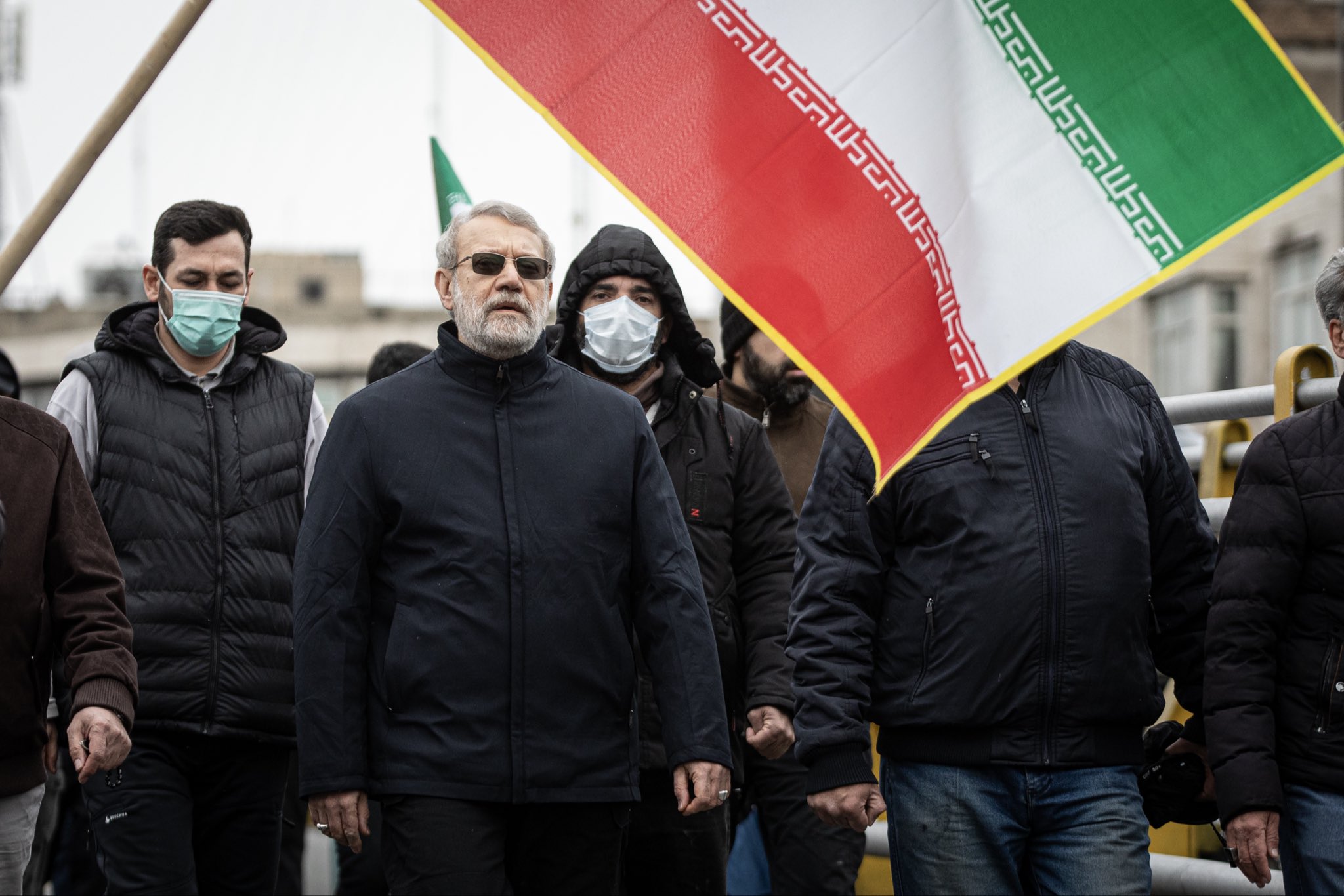
The killing of two senior Iranian officials has not slowed Iran’s military operations, as drone and missile attacks continued across the region following the assassinations.
Trita Parsi, an Iran expert and executive vice president of the Quincy Institute, said in a post on X that he saw three potential motives for the Israeli killing of Larijani, including eliminating potential off-ramps for President Trump to end the war, as Larijani was previously in favor of negotiations and de-escalation.
“There had been some efforts by Larijani to speak directly with senior Trump officials in December, for instance, to prevent the war. The Israelis want the war to continue to degrade Iran’s military capabilities further to shift the balance in the region in Israel’s favor for years to come,” Parsi wrote.
A second possible motive Parsi suggested was that it could be a shift in the US-Israeli strategy back to regime decapitation, as the US is failing to open the Strait of Hormuz. “But if he cannot open it militarily, then the original idea of regime implosion may prove another path. As such, the killing of Larijani may have been seen as a second bite at the apple. The first bite, the assassination of Khamenei, did not yield results. But a few more assassinations of key figures may, the thinking would go,” he said.
Some Trump officials have tried to distance the US from Israel’s targeted assassinations of senior Iranian officials, but after the killing of Larijani and Soleimani, Israeli Prime Minister Benjamin Netanyahu posted a video with US Ambassador Mike Huckabee where they joked about the killings. “Crossing names off the list is good – doing it shoulder to shoulder with our American friends is even better,” Netanyahu said on X.
Parsi said that the third potential motive was that the opportunity just happened to present itself. “The assassination may have also simply occurred because the opportunity presented itself, rather than having been motivated by either a shift in strategy or a sabotage effort by the Israelis to kill off Trump’s off-ramps,” he wrote.
Parsi added that whether Israel intended it or not, the “most likely outcome, nevertheless, is the destruction of potential off-ramps for Trump.”