Updated on February 17, 2026, at 6:45 pm EST
Following indirect talks with US officials in Geneva on Tuesday, Iranian Foreign Minister Abbas Araghchi said there was a “clear path” to a deal, though he stressed that an agreement wasn’t imminent and that more work needed to be done.
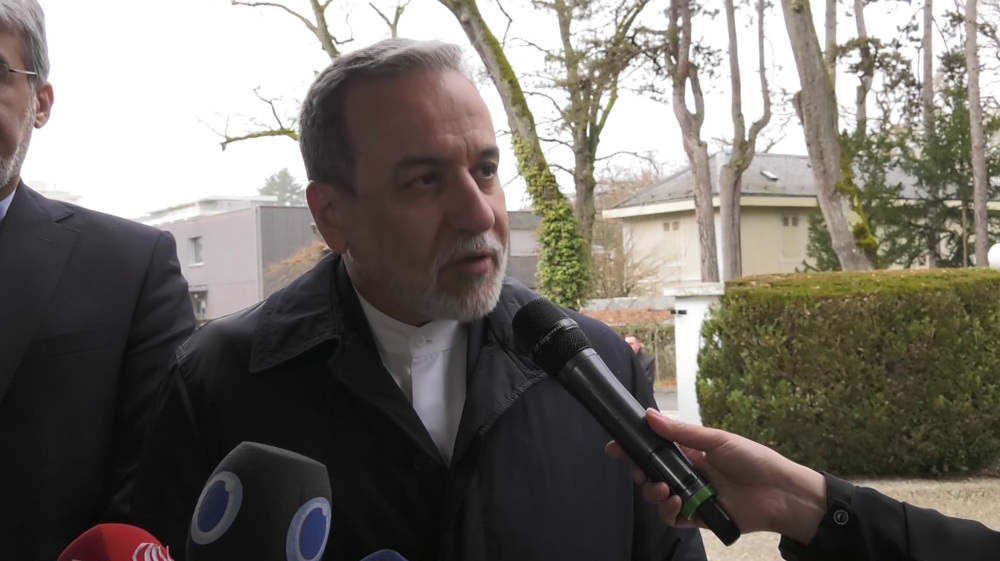
Araghchi told reporters that “good progress” was made and that the US was more “serious” this time than in the previous round of negotiations in Oman. “Finally, we were able to reach an agreement on a set of guiding principles based on which we will move forward and discuss the text of a potential deal,” he said.
US Vice President JD Vance later threw cold water on the idea that a deal could be reached soon, saying, “In some ways, it went well. They agreed to meet afterward. But in other ways, it was very clear that the president has set some red lines that the Iranians are not yet willing to actually acknowledge and work through.”
Iranian officials have previously said that the US dropped its demands for a deal to include zero nuclear enrichment and restrictions on Iran’s ballistic missiles, conditions sought by Israel that are designed to collapse diplomacy and ensure war. But US officials, including President Trump, continue to mention the demands when discussing what they want a deal to include.
Araghchi added that the two sides would work on the text of a potential agreement and exchange it before holding another round of negotiations. The US side was led by US envoy Steve Witkoff and Jared Kushner, President Trump’s son-in-law, who have not yet made public comments on the negotiations.
An unnamed US official told Axios that the talks “made progress” but “there are still a lot of details to discuss.” The US is also continuing its massive military buildup in the region, with a second aircraft carrier on its way and the US military deploying 50 F-35, F-22, and F-16 fighter jets to the Middle East over the past 24 hours, according to the Axios report.
Despite the negotiations, the threat of a US attack remains since during the lead-up to the 12-day US-Israeli war on Iran that was launched in June 2025, the US and Iran were engaged in nuclear talks, and President Trump claimed he was committed to that diplomacy as Israeli jets were getting in the air to launch the first strikes on the Islamic Republic.
Ahead of the talks in Geneva, Iran temporarily closed the Strait of Hormuz for live-fire drills, demonstrating to the US that it can take actions that have a major impact on the global economy if the US attacks. According to CNBC, about 13 million barrels per day of crude oil transited the Strait of Hormuz in 2025, accounting for roughly 31% of global seaborne crude flows.
Iranian Supreme Leader Ayatollah Ali Khamenei also warned that Iran could hit US warships in the region. “The Americans constantly say that they’ve sent a warship toward Iran. Of course, a warship is a dangerous piece of military hardware. However, more dangerous than that warship is the weapon that can send that warship to the bottom of the sea,” he wrote on X.