An international nuclear weapons testing monitor said on Friday that there was no evidence China conducted a nuclear test on June 22, 2020, after a US official accused Beijing of secretly conducting a test that day.
“China has conducted nuclear explosive tests, including preparing for tests with designated yields in the hundreds of tons,” US Undersecretary of State Thomas DiNanno said in a post on X, a claim he also made at a UN disarmament conference in Geneva.
“China has used decoupling – a method to decrease the effectiveness of seismic monitoring – to hide its activities from the world. China conducted one such yield-producing nuclear test on June 22, 2020,” he added.
In response to the US claim, Robert Floyd, the executive director of the Comprehensive Nuclear-Test-Ban Treaty Organization (CTBTO), issued a statement. “Regarding reports of possible nuclear tests with yields in the hundreds of tonnes, on 22 June 2020, the CTBTO’s [International Monitoring System] did not detect any event consistent with the characteristics of a nuclear weapon test explosion at that time. Subsequent, more detailed analyses have not altered that determination,” he said.
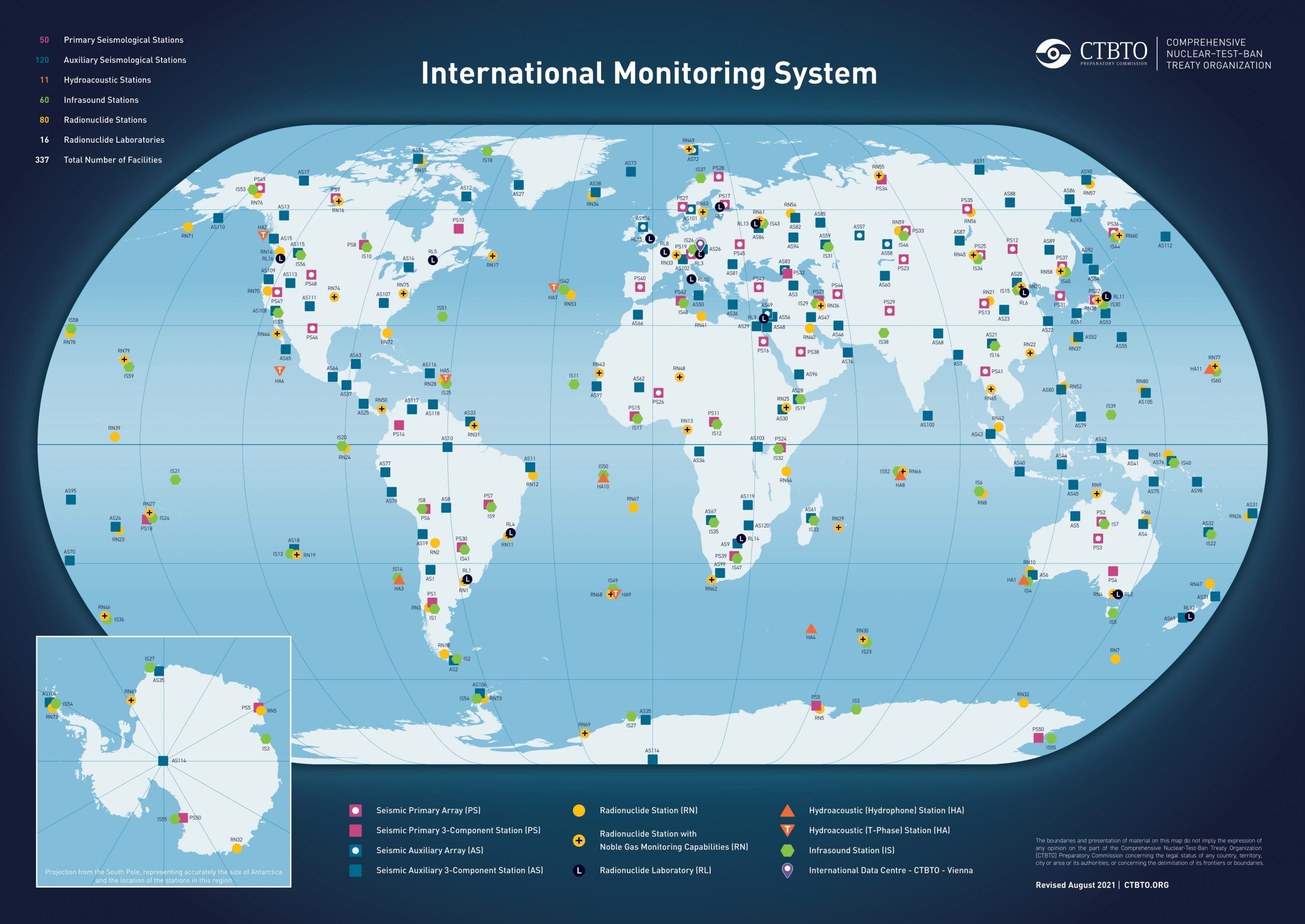
Floyd explained that his organization’s International Monitoring System (IMS) is “capable of detecting nuclear test explosions with a yield equivalent to or greater than approximately 500 tonnes of TNT, including detecting all six tests conducted and declared by the DPRK.” He added that any test below the 500-ton level is “roughly 3% of the yield of the explosion that devastated Hiroshima.”
Chinese Ambassador Shen Jian, Beijing’s representative in Geneva. also strongly denied the US claim. “China notes that the US continues in its statement to hype up the so-called China nuclear threat. China firmly opposes such false narratives,” he said. “It (the United States) is the culprit for the aggravation of the arms race.”
The US accusation suggested the Trump administration may be looking for a pretext to restart nuclear weapons testing that involves explosives, something President Trump has suggested he may resume.
DiNanno’s claim also came after the expiration of New START, the last nuclear arms control treaty between the US and Russia, which limited the deployment of nuclear warheads and strategic launchers. The treaty expired without the US accepting a Russian offer to maintain its limits for a year to give room to negotiate a replacement, meaning that for the first time in many decades, Washington and Moscow have no constraints on their nuclear arsenals.