President Trump and Israeli Prime Minister Benjamin Netanyahu agreed to give Hamas a two-month deadline to disarm, according to a report from Israel Hayom, an outlet owned and published by Trump mega-donor Miriam Adelson.
Trump said during a joint press conference with Netanyahu in Florida on Monday that if Hamas doesn’t give up its weapons within a certain amount of time, there would be “hell to pay” and it would be “horrible for them,” signaling he would give Israel the green light to restart its full-scale bombing campaign.
Trump also claimed during the press conference that Hamas has agreed to disarm, but the group has maintained it won’t give up its weapons unless there is the establishment of a Palestinian state or progress in that direction. A Hamas official suggested recently that the group would be open to a temporary disarmament where it “freezes” or “stores” its weapons.
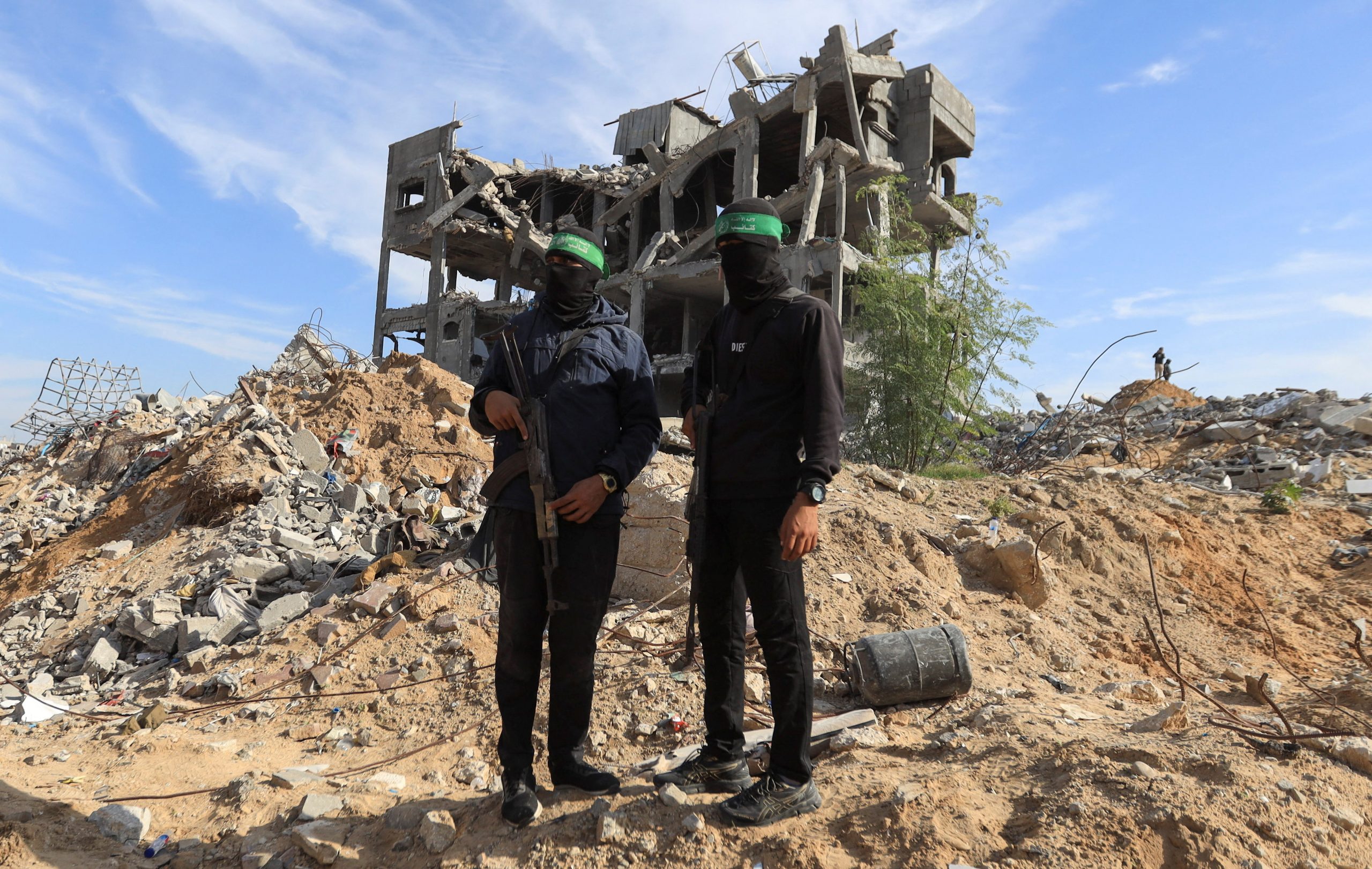
“We are ready to lay down these weapons. I mean, not to use it for five, seven, 10 years, as long as we are not attacked, because the second question is always, OK, Palestinians have to be disarmed. What about the other side?” Bassem Naim, a senior Hamas official based outside of Gaza, told NPR earlier in December.
Naim also said that Hamas wouldn’t disarm unless there were negotiations toward a Palestinian state, an idea Netanyahu has repeatedly rejected. Hamas has not agreed to every point of President Trump’s 20-point plan for Gaza, which calls for the complete demilitarization of Gaza, but it has said the outline is a good basis for negotiations.
So far, Israel and Hamas have only signed a deal that outlined the exchange of Israeli captives and Palestinians held in Israeli jails and the ceasefire, which Israel has constantly violated by continuing attacks against Palestinians and other types of military operations inside Gaza.
Under Trump’s plan, an “International Stabilization Force” is supposed to deploy to Gaza to replace IDF troops who are occupying more than half of the territory. But it’s unclear if the force will ever come together since countries initially willing to participate are concerned their troops may end up fighting Hamas on behalf of Israel.