The US has moved a number of special operations aircraft and multiple cargo planes carrying troops to the Caribbean this week, The Wall Street Journal reported on Tuesday, as the Trump administration continues to escalate against Venezuela.
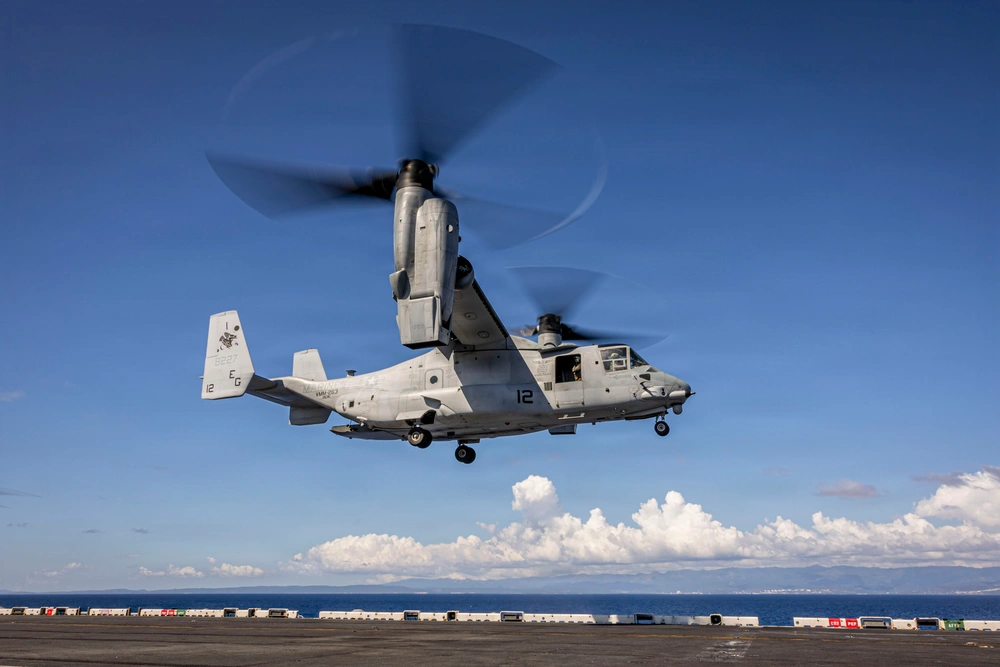
The report, citing US officials and flight-tracking data, said at least 10 CV-22 Osprey tilt-rotor aircraft assigned to special operations forces flew into the region Monday night from Cannon Air Force Base in New Mexico. C-17 cargo planes from Fort Stewart in Georgia and Fort Campbell, which is located on the Tennessee-Kentucky border, also arrived in Puerto Rico.
The latest deployments come as the US has begun enforcing a blockade on Venezuela that so far has involved the seizure of two tankers carrying Venezuelan oil, a major escalation in the US’s effort to oust Venezuelan President Nicolas Maduro.
“He can do whatever he wants, it’s alright, whatever he wants to do,” President Trump said on Monday, referring to Maduro. “If he wants to do something, if he plays tough, it’ll be the last time he’s ever able to play tough.”
Also on Monday, US Homeland Security Secretary Kristi Noem said that Maduro needs to be “gone,” one of the most explicit statements from a Trump administration official about the desire for regime change. “We’re not just interdicting these ships, but we’re also sending a message around the world that the illegal activity that Maduro’s participating in cannot stand, he needs to be gone,” she said.
Noem announced the second tanker seizure over the weekend, involving the capture of a ship carrying Venezuelan oil owned by a Chinese company. The US tanker seizures have been strongly condemned by China as a severe violation of international law.
Trump officials have tried to frame the tanker seizures as some sort of law enforcement operation, but the US has no legal right to capture ships in international waters regardless of whether the vessels are under US sanctions. Trump has said the US plans to “keep” the oil and the tankers, which amounts to outright theft.
Enforcing a naval blockade against a country is traditionally considered an act of war, which would require authorization by Congress under the US Constitution. Last week, the House voted on a War Powers Resolution meant to block Trump from launching a war with Venezuela without congressional authorization, but it failed in a vote of 211-213.